Netflix’s Dear White people

[PLEASE PLACE ALL OFF-TOPIC COMMENTS HERE.  THEY WILL NOT BE POSTED IN THIS THREAD]

Been watching Netflix’s fantastic series Dear White People which depicts racial tensions at a fictional Ivy League college.  Although the show is trying to portray the black characters as super smart, in a weird way it’s causing me to believe more in Rushton’s theory and I think it’s because all the black male actors on the show have small heads (or maybe the fact that the sides of their head are shaved causes their heads to appear small compared to their white counterparts).

Blacks & the police

One especially poignant episode occurred when the police crashed a house party and pulled a gun on a small headed but super smart black guy.  The black guy was not a nerd and does extremely well with the ladies, but his extremely high IQ was revealed by him dominating a tipsy trivia contest.  What should have been a great night for him turned dark when he told the white character who was throwing the party not to say the N word, even though it was part of the lyrics to a song by a black artist that the black students were singing along to.

This led to the high IQ black getting upset and part of the racism the show was depicting was that a black guy can’t even get upset without some white panicking and calling the cops, who humiliated the black guy by demanding he show his school ID card to prove he was a student (something the white boys he was fighting did not have to do, even though they were much less qualified to attend the school from an IQ perspective).

And yes I realize shows like this are largely propaganda (or brainwashing as Philosopher would say), but it’s well written nonetheless.

Light skinned privilege

Another interesting subplot is the tension between a light skinned black girl (who wears her hair natural and is politically radical) and her dark skinned friend (who straightens her hair and acts like a white sorority girl).  I’ve long noticed that a lot of the most liberal (pro-black) blacks tend to be light skinned, and I’ve wondered if this was because of higher IQ (which is correlated with liberalism) or because they’re trying to prove their blackness.  But the show raised a third possibility: light skinned privilege.  They have the luxury of being politically provocative because they’re less threatening to whites.

Many whites scoff at the idea of white privilege and Steve Sailer has gone as far as to suggest that being black is an advantage in 21st century America.  It’s easy to see why Steve would think this when so many of the most powerful Americans are black (Oprah, Obama, Colin Powell, Condi Rice).  But a closer examination reveals something more interesting: with the exception of the dark skinned Oprah, all of these powerful black Americans are at least half white on the genetic level.  I suspect that if you separate light skinned blacks from regular blacks, there’s no net advantage to being black in America.  Yes blacks are more likely to get good jobs (controlling for IQ) but they’re more likely to be unemployed, in jail and in poverty (controlling for IQ).

Whatever benefits come from affirmative action and tokenism are likely cancelled out by racism (yes, it still exists), so being black is a wash (neither good nor bad), unless you’re a light skinned black where you get the benefits of affirmative action without having to deal with much racism.

Race vs social class

This is not to deny that black Americans (both dark and light) are oppressed in America, but they are currently oppressed because of class, not because of race (though race is what historically caused their class).  Descendants of slaves are the lowest social class in America because they were denied the ability to build financial and cultural capital for centuries.

Some blacks feel Obama was able to become the first black president because he enjoyed all the benefits of affirmative action, without the stigma of looking black or the cost of coming from America’s slave class (on the contrary, his pedigree was upper class)


Revised conversion of new GRE to IQ: Part 1

[PLEASE PLACE ALL OFF-TOPIC COMMENTS HERE.  THEY WILL NOT BE POSTED IN THIS THREAD]

In order to convert the new GRE to IQ equivalents, we must first know the means and standard deviations of the Americans who take the GRE.  Commenter George kindly provided that information:

The ETS publishes the “GRE Worldwide Test Taker Report” periodically. The report for test takers between 2013-2016…shows a US mean/SD of 152.7/7.6 for Verbal and 150.2/7.8 for Quantitative

Next, we’d like to know the mean and SD of the composite score (V+Q).

The mean can be determined simply by adding the mean V and mean Q, which gives 302.9.  To get the SD of the composite, we must know the correlation between these subscales.  Among the subset of people who took the old GRE after also taking the SAT, the correlation was 0.56.  If we assume the correlation is the same for all GRE takers, and also for new GRE takers, then we can apply the following formula to get the SD of new GRE V + Q composite:

formula

r is the correlation between the two tests that make up the composite and σ is the standard deviation of the two tests.

So let’s get out our calculators:

Composite SD = SQUARE ROOT OF: 7.6(7.6) + 7.8(7.8) + 2(0.56)(7.6)(7.8)

Composite SD = SQUARE ROOT OF: 57.76 + 60.84 + 66.39

Composite SD = SQUARE ROOT OF: 184.99

Composite SD = 13.6

Now that we know the mean and SD for the verbal, quantitative and composite scores we can convert them to the IQ scale (where the U.S. mean and SD are defined as 100 and 15 respectively).  The problem is U.S. GRE takers are an academic elite, and thus have a different IQ distribution from the general U.S. population.  How different?  I’m no longer comfortable answering that without doing a bit more research, so we’ll save that for part 2.


Svante Pääbo gives bad answer to good Neanderthal question

[PLEASE PLACE ALL OFF-TOPIC COMMENTS HERE.  THEY WILL NOT BE POSTED IN THIS THREAD]

I have great respect for Svante Pääbo for all the brilliant work he’s done on ancient DNA, even ranking him as the 47th most influential living human of all time. By sequencing the DNA of Neanderthals and comparing it with our own, Pääbo hopes to discover whatever small genetic changes occurred in the final stages of evolution that allowed modern humans to dominate the globe in ways Neanderthals never did.  Studying the difference between Neanderthals and modern humans is especially focused because we separated from them only several hundred thousand years ago, unlike chimps who we separated from several million years ago.

The differences between Neanderthals and modern humans could seem huge to most people.  When you look historically at how sub-Saharan Africans were considered subhuman, and they separated from non-Africans merely tens of thousands of years ago, imagine how stigmatized Neanderthals would have been.

Genetically the difference between Neanderthals and modern humans is about ten times greater than the difference between blacks and whites, but about ten times smaller than the difference between modern humans and chimps.  I wonder what a racist white slave master would have thought if a Neanderthal had walked on to his plantation.  Would he instantly recognize from appearance that his black slave was far more related to him than the Neanderthal since the former two both share similar height, build, cranium shape and faces, or would he have felt a greater kinship with Neanderthals because they both have white skin?

Pääbo argues that the genetic differences between modern humans and Neanderthals may explain why modern humans went to the moon while Neanderthals were confined to the cave.

However a woman in the audience at his talk makes the exact same point I would make if I’m ever lucky enough to attend one of Pääbo’s talks:  Almost all the truly revolutionary achievements of modern humans were made after Neanderthals went extinct 40,000 years ago.  Before 40,0000 years ago, our species wasn’t even making representational art, let alone computers and rockets. 

So why does  Pääbo (like Steve Hsu) assume we’re much smarter (or at least better at sharing knowledge), when Neanderthals (almost) kept up with us when they were alive?  The woman states that if Neanderthals had been the surviving species, maybe they’d be building satellites today.

Pääbo replied by saying that Neanderthals had three or four hundred thousand years to do it but didn’t, while modern humans had a hundred thousand years or even less yet actually did it.

See the 1:03:09 mark of the below video:

What are you talking about Pääbo?????!!!!!

According to Wikipedia (as of March 21, 2018), Neanderthals existed from 250 kya to 40 kya, while Homo sapiens existed from 300 kya to today.  By my math, that means Neanderthals had only 210,000 years to create advanced culture while we’ve had 300,000 years.

Maybe Wikipedia is wildly wrong, as these numbers can vary a lot based on how you classify and date fossils, but why does Pääbo think our species (or whatever term he prefers) is only 100,000 years old?  Perhaps like Richard Klein and Noam Chomsky, he thinks there’s a big genetic difference between behaviorally modern humans and the merely anatomically modern ones who preceded them?

But if you define the start of our species (a term Pääbo strongly avoids) as the moment our culture accelerated, then by definition we’re going to look like fast learners.  It would be like me staring confused at an exam for 3 hours, and in the last 4 minutes, I suddenly understand and answer all 10 questions at once.  Did I suddenly get smart in the last 4 minutes, or did the hours of thought preceding it just make my last 4 minutes seem especially smart?  The Neanderthals never got their last 4 minutes because they went extinct, so we don’t know if they would have been late bloomers just like we were.


Oprah & Donahue’s brilliant Iraq war opposition

[PLEASE PLACE ALL OFF-TOPIC COMMENTS HERE.  THEY WILL NOT BE POSTED IN THIS THREAD]

On the eve of 15th anniversary of the Iraq war it’s worth remembering that Oprah and her mentor Donahue did more to warn America against the Iraq war than virtually anyone in America.

Although Oprah’s brilliant Iraq war record is slightly tarnished by a pro-war show she did in Oct 2002, in the final months leading up to war, her show was perhaps the loudest voice against it, anywhere in America:

Oprah’s mentor Phil Donahue also deserves great credit for getting fired from his cable TV gig for his Iraq war opposition, which gives you a sense of how hard it was to oppose the Iraq war before it began:


Open thread March 18 to March 24, 2018

This is an open thread for the week March 18 to March 24.  Feel free to discuss all off-topic comments here.

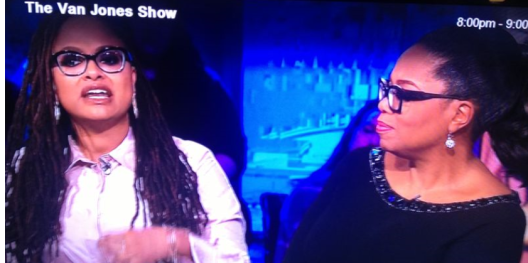
So the World’s biggest brained woman was making the talk show rounds, promoting her new movie A Wrinkle in Time where she plays a good witch.  The movie is directed by Ava Duvernay,  the first black woman to direct a nine figure movie.  Oprah absolutely adores the smaller brained Ava:

bigbrain2

Oprah’s appearance on James Corden’s show was odd, but I was impressed by Oprah knowing the exact materials her bathtub was carved out of when Cordon pursued this odd line of questioning.  Cordon’s big head was dwarfed by Winfrey’s.

bigbrain1

Oprah also appeared on Ellen

bigbrained4

Ellen even came to Oprah’s defense when she was attacked on twitter by the president

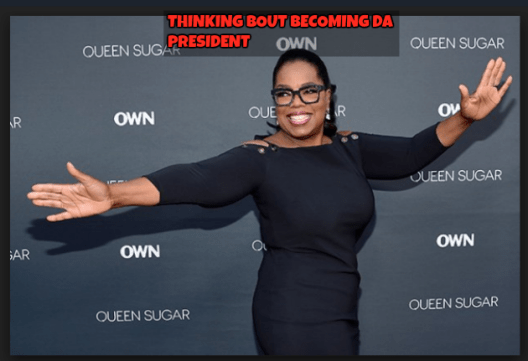
So high is Oprah’s status that she’s considered a viable presidential candidate despite zero politically experience.

president2


Oprah will almost certainly never run for president, but she enjoyed the attention of so many people thinking she’d win.  And while Oprah recently claimed she doesn’t know enough to be president and her critics dismiss her as an overrated vapid celeb, I estimate she’d be the most intelligent President since Bill Clinton.

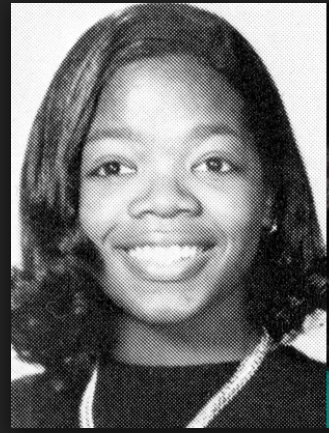
Indeed when Oprah was a teenager attending a working class high school in Nashville Tennessee, she won so many public speaking contests that she was invited to the white house to meet Nixon.  Nixon secretly believed the “Negro” was genetically less intelligent, but not even Nixon could know that this particular young girl had a cranium that dwarfed his own, and with a lot of luck and hard work, would become (at her peak) the World’s richest black and most influential woman.

youngoprah

Oprah in the Nixon era


New genetic IQ study

[PLEASE PLACE ALL OFF-TOPIC COMMENTS HERE.  THEY WILL NOT BE POSTED IN THIS THREAD]

Lion of the Blogosphere writes:

There’s a study publixhed in Molecular Psychiatry.

The only major newspaper to write an article about it is The Telegraph and their paywall prevents me from reading what they have to say about it.

Currently, genetic testing can only reveals 7% of intelligence differences between people but I’m sure as research and methods in genetic sequencing and computer analysis improve, that will eventually become a much higher percent. And then we will also finally have proof that blacks are less intelligent than whites because of genes, and not discrimination or poverty.

I took a look at the study he’s citing and found a few relevant quotes:

Using our meta-analytic dataset on intelligence we carried out polygenic prediction into UK Biobank subsamples following their removal from the meta-analysis. Between 3.64 and 6.84% of phenotypic intelligence (as measured by the VNR Test in UK Biobank) could be predicted (Supplementary Table 10); the upper limit is an improvement of ~43% on the largest reported estimate to date, of 4.8%

So if I understand correctly, it sounds like 7% is the upper limit of some kind of margin of error, but seeing as the lower limit is still around 4%, the single best estimate remains around 5%.  However taking the square root of 5% tells us that genomic predictions correlate 0.22 with IQ, which is a weak (though not terrible) correlation.

However the good news for behavioral genetics is that the IQ test used in this study (the verbal-numerical reasoning test, abbreviated VNR) sounds shockingly bad:

The VNR test consists of 13 items, 6 verbal and 7 numerical questions, all of which are multiple choice. An individual’s verbal numerical reasoning score was measured by summing the number of correct responses given within a 2 minute time period.

Tests with only 13 items (scored right or wrong) almost never have high loadings on g (the general intelligence factor) because the reliability is too low.  My educated guess is that the VNR has a g loading of only 0.65.  Dividing the polygenetic predictive power (0.22) by the estimated g loading of the VNR (0.65), gives 0.34, which is a reasonable estimate of the genomic correlation with a hypothetically perfect measure of g.

A 0.34 correlation is still only moderate, but even modest correlations add up, because by the logic of regression, for every 1 standard deviation increase in the genomic score, general intelligence should increase 0.34 standard deviations on average (5 IQ points).  This is not trivial.  And I agree with Lion that predictive power will increase dramatically as the technology advances.

Of course none of this tells us anything about black-white IQ differences unless the races have been found to differ significantly on these genomic scores.

But of course as commenter Mug of Pee points out, all these predictions are in Western countries so the genotype-phenotype correlation could just be a local phenomenon and not reflect a truly independent genetic effect.  We have no idea whether these genomic scores would predict IQ in societies with radically different environments.

How did Oprah get so rich?

[PLEASE PLACE ALL OFF-TOPIC COMMENTS HERE.  THEY WILL NOT BE POSTED IN THIS THREAD]

Many people do not understand how Oprah became so rich.  The confusion is understandable because I don’t think any other popular TV star has ever been officially declared a billionaire by Forbes (though Merv Griffin and Bill Cosby both made the Forbes 400).  According to Forbes, almost all of Oprah’s wealth was made from her syndicated talk show The Oprah Winfrey Show which ran from 1986 to 2011.  That wealth can be largely explained by four things: 1) ownership, 2) syndication, 3) longevity, and 4) timing

OWNERSHIP

When Oprah first came to Chicago to take over a failing morning talk show, her agent was very popular and people would tell Oprah what a great guy he was.

This is where social IQ is extremely important to getting rich, because Oprah asked herself, why would three separate network people go out of their way to tell her how great her agent is?  Oprah shrewdly realized that if the agent was really advancing her interests, he wouldn’t be so popular with her network bosses, so she fired him.

Oprah then went hunting for the toughest agent in town.  She had heard that a Chicago lawyer named Jeffrey Jacobs was a “piranha” and settled on him.  Because Oprah’s ratings were so incredibly high, Jacobs was able to negotiate something better than money: ownership of the show, the production company, and syndication rights.  Because the network was not legally allowed to syndicate Oprah themselves, they agreed to give Oprah the syndication rights on the condition that ABC owned networks get first crack.

SYNDICATION

Social IQ may help you hire the right agent, but at least some math IQ is needed to understand the business.  Oprah’s biographer George Mair writes on page 103 of Oprah Winfrey: The Real Story:

The arithmetic of syndication is not that hard to understand.  Somebody owns a television show and rents it to stations that sell commercials in the show.  If it’s a dramatic show or comedy like Hill Street Blues or Cheers or The Cosby Show or I Love Lucy, it is largely timeless and may run forever.  The only caveat is that you need enough shows “in the can” to go into syndication, because while the show was originally shown once a week, in syndication, such shows are usually shown on independent stations every weekday in the same time slot…Syndicating Oprah is simpler because she does five shows a week…

On page 105-106 Mair writes (as of 1994):

Oprah will appear on approximately two hundred stations each week, which will pay King World between $100,000 and $200,000 per week for five shows.  The figure varies with the size of the audience in each market.  The $200,000 figure is quite high, and that is the amount the ABC station in Los Angeles, KABC-TV, has agreed to pay under the new contract, due to run through the 1994-95 season.  It was forced to pay this amount in the face of strong counterbid from the rival CBS station.  Similar competition occurred in other markets where CBS faced ABC because The Oprah Winfrey Show served as a lead for two long hours of local news.  As noted elsewhere, this programming sequence helps build local news ratings.

If you use the lower figure of $100,000 and multiply it by the approximately two hundred U.S. stations buying Oprah, you see how King World grosses $20 million a week on the Oprah Winfrey Show, against which the production cost of the show runs about $200,000 a week.  Thus, low-cost shows sold to hundreds of stations can make a fortune for the participants and the star.  Even if the program is not as highly rated as the Oprah Winfrey Show, it can make a lot of money, which is why everyone wants to get into the syndicated talk show business.

oprahrichest

As early as 1989 TV Guide declared Oprah the richest woman on TV, though sadly they infamously put her head on Ann-Margaret’s body for this photo


The difference between syndicating a show and running it on a major network is the difference between retail and wholesale.  When TV stations are negotiating how much to pay for a single show (syndication) they will pay a lot more per show than when they are negotiating how much to pay for a whole network of shows, for the same reason you’ll pay a lot more (per movie) to rent individual movies than you’ll pay to stream a whole library of movies on Netflix.  This explains why Leno and Letterman (who were tied to networks) were never in the position to become billionaires.

The Oprah Winfrey Show is hardly the only show to strike syndication gold. Seinfeld reruns have generated  $3.1 billion just from repeating the same 180 shows over and over again, every weekday for 15 years in syndication.  Of this, Jerry Seinfeld and Larry David were paid $400 million each (before taxes).  Although Seinfeld is nowhere near a billionaire like Oprah, he actually made more money per episode just from syndication than Oprah ever did and that’s largely because sitcoms are able to rerun far more than talk shows can without losing their appeal.

LONGEVITY

The third key to Oprah’s incredible wealth is her staying power.  In a field where we’re always looking for the next hot thing, remaining the #1 talk show in syndication for virtually 25 straight years was a virtually unparalleled show business achievement.  This allowed the syndication dollars to accumulate year after year, and put Oprah in the position to negotiate increasingly favorable contracts with her distributer King World.  For example, before 1994, King World received 43% of the operating profit from the Oprah Winfrey show.  But when Oprah renegotiated her contract in 1994, their percentage gradually dropped to 25%

TIMING

The fourth key to Oprah’s success was timing.  Her show’s popularity peaked before the rise of cable television and the internet.  Because the audience was much less fragmented in Oprah’s heyday, she was averaging 12 million U.S. viewers per day in the early 1990s, but by the time she ended in 2011 she was averaging six million.  And yet even with six million viewers, she remained far and away the highest rated talk show in syndication.  She was still the biggest fish in the pond, but the pond had shrunk dramatically and she was lucky to have dominated the medium at the peak of its power.  It’s interesting to ask whether we’ll ever see another Oprah, or perhaps the media has become too fragmented for any one personality to achieve such a large and loyal audience for so long.

What Chomsky thinks the first humans were thinking


[PLEASE PLACE ALL OFF-TOPIC COMMENTS HERE.  THEY WILL NOT BE POSTED IN THIS THREAD]

Some readers have been very critical of the thesis presented by the book Why Only Us by Noam Chomsky and Robert C. Berwick.    Berwick jokes that Chomsky deserves only 5% of the credit for the book.

The thesis seems to be that language developed very recently and rapidly, in either a single, or a small number of genetic mutations.  Commenter Mug of Pee condemned this theory saying:

VIQ is heritable and varies continuously. the very lowest VIQ humans are no smarter than chimps at language.

imagine that the first anatomically modern humans were verbal idiots…. then the utility of language selected for higher and higher verbal ability, language evolved. and the same thing would happen in any large brained species with a vocal apparatus similar to that of humans. homo erection spoke, just really badly.

the idea that a single mutation produced the language faculty is 100% AUTISTIC.

First of all, humans with the linguistic ability of a chimp are probably always those with organic mental retardation, meaning disabilities caused by the overriding effect of single mutant genes or chromosomal abnormalities.  You never see anyone with familial retardation (i.e. low IQ caused by the extreme end of normal variation) who resembles a chimp linguistically.  This is important because it suggests that the difference between man and ape may not be “continuous” as Mug of Pee suggests, but discrete.

In other words, what Chomsky and Berwick are arguing is that prior to about 175 kya or so (give or take perhaps 125,000 years), humans not only had less verbal ability, but a different kind of verbal ability.  In other words they seem to think language is almost a binary ability.  You either have it or you don’t.

Specifically, if we cloned a human from 175,000 years ago, and taught them English, they could acquire a vocabulary almost as big as ours, but if we said to them: “bird ate worm”, they might picture this in their mind:

In other words, they would understand all the words of the sentence, but they would forever be separate concepts.  They would never be able to see the big picture.

By contrast, after the genetic mutation(s) occurred, when you say “bird ate worm” they would picture this in their mind:

birdseatworm

The difference between these two interpretations is what Chomsky calls “merge”, the ability to glue different concepts together to form a bigger concept.  And then once you merge multiple concepts into one, you can then merge the multifaceted concepts themselves together to create an even more complex thought “bird ate worm at night” giving rise to almost infinite levels of creativity.

If I understand Chomsky and Berwick’s thesis correctly, this capacity to merge ideas is what makes human verbal ability not just quantitatively different from pre-human communication, but qualitatively different too.

Of course all this is based in part on the somewhat discredited idea of “the great leap forward”, the notion that cultural progress in ancestral humans occurred in a sudden largely upper paleolithic explosion, rather than a gradual transition over millions of years.  More and more scientists believe in gradualism, leaving Chomsky and Berwick in the minority.

But this “merge” ability Chomsky describes extends beyond just language.  According to Berwick, humans are the only animal that makes multifaceted tools, for example a pencil with an eraser at the end.  With one side you write and with the other side, you correct mistakes.  Apparently the two men believe such tools were impossible to conceive before “merge” mutated into existence.

pencil

Here’s Chomsky talking about “merge”:


How old is language? More thoughts from Noam Chomsky

[PLEASE PLACE ALL OFF-TOPIC COMMENTS HERE.  THEY WILL NOT BE POSTED IN THIS THREAD]

In the below video Noam Chomsky talks again about when language likely emerged.  He notes that anatomically modern humans (AMH) are about 200,000 years old and claims there’s no evidence of symbolic behavior predating AMH.

He then claims that the San split-off from other AMH about 150 kya, and since they have language, Chomsky seems to be hinting that language emerged sometime between 200 kya and 150 kya.  Perhaps 175 kya is a good guess.

There are a few potential challenges to Chomsky’s argument:

  1. Some scientists are now suggesting AMH might be 325,000 years old, not 200,000 years old.
  2. According to Greg Cochran, the split between Bantu and African pygmies was 300 kya, and since both these groups have language, this suggests language must be at least 300,000 years old (unless gene flow since the split explains why both groups have it). Although Peter Frost disagrees with Cochran.
  3. An engraving likely made by Neanderthals found in a cave in Gibraltar (and more recently, representational cave drawings of animals) implies AMH may not have been the only species capable of symbolic behavior. If Neanderthals also had this ability it suggests they may have inherited it from the common ancestor they share with us, implying symbolic behavior (and thus language) may be at least 700,000 years old.