Hereditary (2018)

Pumpkin Person rating: 7 out of 10

For years commenter “Race Realist” has been telling me to watch this movie (because I’m a horror fan who is interested in genetics?) but I avoided it because when it comes to horror, I prefer the semi-realistic (i.e. slasher films) to the supernatural (i.e. ghost stories) because the former at least have some kind of logic to then, while in the latter, anything goes (people start flying or shape-shifting, pillows turn into people).

But in the spirit of Halloween I decided to step out my comfort zone and give this film a chance.

The film tells the story of Annie Graham (played by Toni Collette), her husband Steve ( Gabriel Byrne ), and their two teenaged kids, Peter (Alex Wolff ) and Charlie ( Milly Shapiro). For a film called Hereditary, there’s not a lot of physical resemblance between the swarthy Wolf and the pale actors who play his parents.

The Grahams are an upper middle class family with a creepy but beautiful home in the Woods. The film starts with the death of Annie’s mother (who suffered from mental illness) and her fear that her daughter Charlie will do so too. She encourages her socially well-adjusted son Peter to take Annie to a party and something utterly horrific happens. It happens so quickly that I actually had to rewind the film several scenes later to see exactly what happened because I had no idea I had missed something that important.

The film is well-written, well-acted and well-directed (with lots of use distant camera shots) but it’s not fun, enjoyable or entertaining. But if you’re looking for an atmospheric and effective horror film to watch on Netflix this Halloween season, it might be worth a look. If you’re looking for a horror film about Behavioral Genetics, don’t let the title fool you.
What effect does race have on income?

Commenter “destructure” wrote on Lion of the Blogoshphere’s blog:

 blacks with an IQ of 100 actually earn the same as others with an IQ of 100. That’s fine. However, blacks with an IQ of 120 earn more on average than others with an IQ of 120. And I’m not sure why upper middle class blacks should be getting affirmative action when they’re already earning more money than others.

Lion responded:

Totally makes sense because a black with an IQ of 120 will get accepted to a better college, get affirmative-action hired into a better career, than a white with the same IQ. But what’s the source for that factoid?

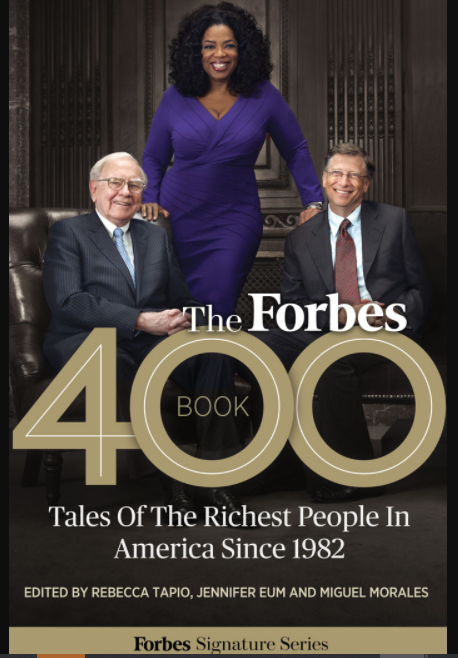
On the other hand, if high IQ blacks overperform their white counterparts economically, we’d expect more black billionaires. At yet despite being 13% of America, blacks have never been even 1% of the Forbes 400 richest Americans list and are sometimes only 0.25%. By contrast Jews are arguably 36% of the Forbes 400 despite being only 2% of America (though exact stats depend on how Jews are counted).

I decided to use my celebrity status to reach out to the World’s most influential social scientist, Charles Murray, since his book Human Diversity found that even controlling for IQ, white Americans are more prosperous than black Americans, though less so than Asian Americans (at least among Generation Y thirty somethings). With respect to high IQ blacks in particular, Murray replied:

But if high IQ blacks benefit from affirmative action, why doesn’t that translate into economic benefits? One possibility is that affirmative action devalues black credentials. For example Supreme Court Justice Clarence Thomas was overlooked by dozens of law firms despite having one of the most prestigious law degrees in the country. Another possibility is that whatever edge blacks get from affirmative action is negated by racism.

On the other hand, if America is still racist, why do Asian Americans earn 157% as much as their IQ matched white counterparts according to Murray’s book? Perhaps because they work much harder than whites do while experiencing much less racism than blacks do (at least prior to the coronavirus pandemic).

Source

It’s also worth noting that whatever advantage Asian Americans have in regular income has not yet showed up among the Forbes 400 suggesting that hard work only goes so far.

Favorite scene in the Halloween franchise

With Halloween only 2 days away , I thought I’d post my favorite scene in the entire franchise. It’s from Halloween II (1981) and features a guy bumping into Michael Myers on the street while listening to news coverage about the Myers massacre on his radio.

What I love about this scene is that the whole town obsessing over Myer’s killing spree, he’s all over the news, everyone’s talking about him, police are racing through the streets to find him, and Myers is just casually walking through the heart of downtown and no one notices. Talk about hiding in plain sight.

I also love the look of the mask from behind and how the hair on it has an almost reddish hue in the city street lights. The Myers mask has never looked better than in Halloween II. It’s the same bleached William Shatner mask that they used in the original, but something about the way it fits like a glove on this actor’s head makes it look so beautifully demented and dare I say, autistic.

Hardcore cross-cultural IQ testing

For years I have dreamed of making the most culture-fair IQ test possible and then venturing into the Australian Outback, the African jungles, and the Canadian arctic and testing the natives. Sadly, the coronavirus has derailed those plans from happening, but I was excited to read about similar research published by J.W. Berry in 1966 and 1971. Berry tested five different “races” (Scotts, Eskimos, New Guinean aboriginals, Australian aboriginals, the Temne), each reared in two types of environments (Traditional vs Transitional) on at least three different tests (Khos Block Design, Embedded Figures, and Ravens Matrices).


Ethnic group
Traditional environment
Khos Block Design
Traditional environment
 Embedded Figures
Traditional environment
Matrices
Transitional environment
Khos Block Design
Transitional environment
Embedded Figures
Transitional environment Matrices
 Scotts
 IQ 97  IQ 92 IQ 92 IQ 97 IQ 97 IQ 97
 Eskimos IQ 91  IQ 92 IQ 82 IQ 97 IQ 96 IQ 90
 New Guinea (Indigene) IQ 59 IQ 41 IQ 39 IQ 84 IQ 87 IQ 81
 Australian aboriginal IQ 73 IQ 81 IQ 71 IQ 78 IQ 83 IQ 75
 Temne IQ 57 IQ 41 IQ 33 IQ 62 IQ 49 IQ 36
IQ were calculated by converting raw scores into Z scores using the mean and standard deviation of the transitional Scottish (Edinburgh) sample (table 7 of Berry, 1966)) and then multiplying by 15 (the standard deviation for IQ) and adding 97 (the estimated IQ of Scotland). The raw scores for the Scottish, Eskimo and Temne samples were also found in table 7 of Berry 1966 and and the raw scores for the New Guinean Indigene and Australian aboriginal samples was found in table 2 of Berry 1971; scores of men and women were averaged. The IQ gap between the highest and lowest scoring samples might be exaggerated by the fact that the distribution has not been normalized. On the other hand, the raw scores from which IQ were calculated were based on ages 10 to 70 combined into one sample which tends to inflate the standard deviation and thus minimize IQ gaps.

The absurdly low IQ of some groups on some tests highlights the challenge of creating “culture fair” tests that give credible results. While the low scores on Block Design might be explained by a combination of genetics and severe malnutrition (Sierra Leon men are 2.82 standard deviations shorter than their Black American counterparts), the sub-50 IQ means on Embedded figures and sub-40 IQ means on Matrices leaves little doubt that at least those two tests are culturally biased.

Horror Themed Games Which Get The Blood Pumping

Not written by Pumpkin Person

image.png

24 years ago, when cult classic game Resident Evil was first released on the market, horror was a relatively unexplored theme in gaming. All previous attempts to establish an entertaining and popular horror-themed game had fallen short of the mark.

Resident Evil was therefore revolutionary, showing developers that with a little bit of imagination and outside of the box thinking, horror could be a successful video game theme. In the years since 1996 horror has become an established gaming genre with memorable titles released across all platforms.

Such is the popularity of horror games that it can be tough to separate the good from the bad and find a game that will truly get your blood pumping. Fortunately for you we’ve collated five of the very best horror themed games that you should be playing now and here they are…

#1 Until Dawn (PS4)

In the late 1990s and early 2000s it was impossible to take a trip to the cinema without seeing a trailer for yet another teen slasher movie. The theme was so popular that director Keenan Wayans chose to satirise it in his 2001 comedy release Scary Movie.

Weirdly the teen slasher craze never migrated from movies to games until 2015 when Supermassive Games released their eminently playable PS4 title Until Dawn. The game follows eight teenagers on a trip to a remote cabin up in the mountains.

They aren’t alone though, there’s a frightening presence amongst them intent on picking them off one by one and it’s up to you to make the decisions that will keep your character alive until dawn. The game manages to straddle the line between movie and game effortlessly and will keep you engaged and on the edge of your seat throughout.

Sony exclusive Until Dawn took the previously untapped teen slasher sub-genre to gaming back in 2015

#2 Nightmare on Elm Street (PC & Mobile)

Slot machines may not be best known for their integration of horror but this effort draws on a classic movie to get your blood pumping. Fans of the cult classic film will recognise all of the terrifying characters featured on the spinning reels.

Whereas spotting Freddy might be cause for concern in usual circumstances it is actually a good sing in this game as the vicious villain is the wild symbol. The slot’s successful integration of music and effects from the film helps to create a feeling of suspense and fear as you play.

Fortunately, your brush with Freddy Krueger can end well though with plenty of cash prizes on offer for players. If you’re not a slots aficionado and you want to earn some money while playing, check out this brilliant guide on how to win at slots before logging on to play.

Seeing Freddy Krueger usually means bad news but in this game you’ll be wishing for his icon to appear as when it does, it will bring money

#3 The Dark Pictures: Man of Medan (PS4, Xbox One & Nintendo Switch)

The success of Until Dawn inspired Supermassive Games to come up with another choice-based horror and this one is an absolute classic. Similarly, to its predecessor, The Dark Pictures follows a group of young adults who come up a cropper in a remote place.

The remote cabin in Until Dawn is replaced with a ghost ship in the South Pacific Sea where the characters worst dreams come to life. Again, your choices in the game influence the outcome of the story and determine who lives and who dies.

What makes The Dark Pictures better than Until Dawn is the interactive Shared Story and Movie Night modes which allow you to play along with your friends in a party.

If you liked Until Dawn you’ll love The Dark Pictures: Man of Medan

#4 Alien: Isolation (PC, PS4 & Xbox One)

The 1979 classic horror film Alien has inspired a series of video game spin-offs over the years, but none can shine a light to Alien: Isolation. Released six years ago this month, Alien: Isolation breathes fresh life into the Alien franchise making the Xenomorph terrifying once again.

In the game you take on the role of Amanda, daughter of Ellen Ripley and begin searching a derelict space station. Along the way you discover that the space station may not be as abandoned as once thought as you encounter the Xenomorph, the same fearsome creature that your Mother once fought.

What makes this game so terrifying to play isn’t the blood and thunder of the Xenomorph, rather it is the subtlety of the direction and the anxiety provoking stealth mode. The atmosphere cultivated by the game is a triumph, making it uncomfortable and engaging at the same time.

The Xenomorph was beginning to lose its fear factor until the release of this game in 2014

#5 Resident Evil 7: Biohazard (PC, PS4 & Xbox One)

At the beginning of this article we discussed how the 1996 release of Resident Evil revolutionised the gaming industry by successfully incorporating horror as a genre. In the near two-and-a-half decades since that first release the Resident Evil still rules the roost when it comes to terrifying, blood pumping horror games.

Three years ago, when Resident Evil 7 was released fans bought the game with trepidation, fearing that it could have been a clunky, forced revival of a cult classic series. Fortunately, their fears were misplaced as the game ended up being the best in the series so far.

Director Koshi Nakanishi called on a zeitgeist of horror films from the past two decades to create a gruelling and deeply unsettling game. There’s still enough nostalgia in the game to delight long-term fans of the series but Resident Evil 7 excels in its own right as a disturbing, modern horror game.

Resident Evil 7 is so terrifying that you might have to play it during the day, with the lights on and with other people in the house….

South Africa’s report card in Math

It would be nice to get NAEP type data from every ethnic group because of the large representative samples of test prepared people who take these tests. It would be especially nice to get such data from post-apartheid South Africa and the statistics below come close.

According to a report

The outcomes of black learners are poorer compared to their coloured, Indian, and white counterparts. For example, in 2016 the proportion of black learners who passed maths with 60% or more was 9%, By contrast, the proportion of whites passing with more than 60% was 52% (the
proportions for coloured and Indian pupils were 20% and 40% respectively). In maths literacy, the figures are even starker – only 8% of black learners passed with a mark of above 60%, compared 20% of
coloured learners, 44% of Indians, and 73% of white learners. Figures for other subjects show similar trend

If we assume maths literacy is a proxy IQ test and force the distribution of all groups onton normal curves with an SD of 15, we get:

South African white IQ = x

South African Indian IQ = x – 11

South African Coloured IQ = x – 21

South African Black IQ = x – 30

But what is x?

We know that South Africa is about:

And we know that their average score on international math tests is about 73. Thus solving for x:

0.807(x – 30) + 0.088(x – 21) + 0.079x + 0.026(x – 11) = 73

0.807x – 24.21 + 0.088x – 1.848 + 0.079x + 0.026x – 0.286 = 73

x = 73 + 24.21 + 1.848 + 0.286

x = 99

So if the white Math IQ is 99, then the IQs of the other groups can be deduced.

Ethnicity IQ (based on the percentage of each population scoring 60%+ on maths literacy relative to the white rate)
whites 99
Indians 88
Coloureds 78
Blacks 69

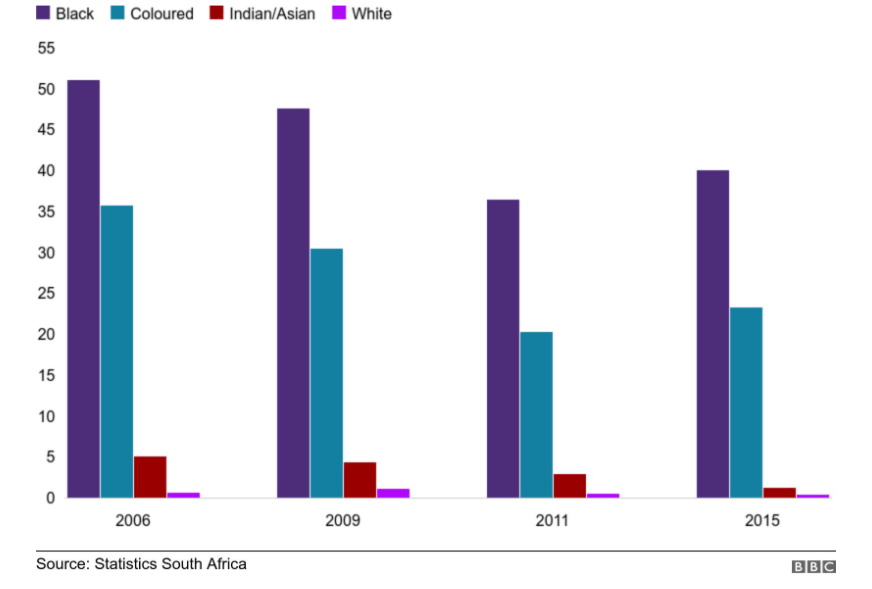
Of course given the legacy of apartheid and the huge differences in living standards and education quality between these groups, it would be very stupid to take scores on a math test as reflective of actual intelligence, let alone genetic ability. As of 2015 it looks like the percentage of Blacks, Coloureds, Indians and Whites living in poverty is about 40%, 24%, 2% and 0.5% respectively (crude guesses based on eyeballing the below graph):

Source

Mrs Duncan & Oprah’s IQ

When Oprah was in the fourth grade, she was sent briefly to live with her father, a barber in Nashville Tennessee. That year she had Mrs Duncan, who impacted Oprah so profoundly that from that moment on she planned on being a fourth grade teacher. Even after becoming a billionaire talk show host, she continued to view herself as a teacher, even starting her World famous book club and building schools in South Africa.

In the South in the early days of integration, Oprah must have been one of the first black students Mrs Duncan ever had, and while Mrs Duncan remembers Oprah as an ideal student, not even she could have imagined that ideal student would grow up to be the most influential woman on the planet and for years, the World’s ONLY black billionaire.

In 1989, Oprah reunited with Mrs Duncan in one of the sweetest moments in TV history. In emotional moments like this, you can totally see the rare gifts that made Oprah show such a blockbuster success (at it’s peak viewership was three or four times the competion).

But the clip is interesting also because of what it tells us about Oprah’s IQ. Oprah’s fluent reading made her the teacher’s pet, and being the best reader in a typical U.S. class implies top 3% verbal ability. But for Oprah to have dominated the class in reading, she must have been at least 0.5 standard deviations above the second best reader. The second best reader in a class of 30 would be at the one one in 15 level, and someone half an SD higher would be approaching the top 1%.

But because Oprah had jumped from Kindergarten to second grade in only a few weeks, Oprah would have been about 8.75 while the average fourth grader would be 9.5. On the WISC-R IQ test, an 8.75 year-old who is on the top 1% of 9.5-year-olds in say Vocabulary, would be in the top 0.5 to 0.1% for her own age group (Verbal IQ 140 – 145). Let’s say a verbal IQ 143. This might be an underestimate because if Oprah’s class were far bigger than 30 students, she might still have been the best reader by a noticeable margin, but I err on the conservative side because Oprah recalls being a terrible writer when she started her TV career (it’s one of the reasons she switched from hard news to hosting talk shows).

Oprah remembers herself as a fluent reader but not very good at math (not “getting” long division). However Mrs Duncan recalls Oprah not struggling with anything and grasping concepts readily. Let’s split the difference and assume Oprah did grasp long division, but only barely. In other words, when it came to math, she was like an average 9.5-year-old (typical fourth grader) despite being 8.75. On the WISC-R Arithmetic subtest, a 8.75-year-old who performs like an average 9.5-year-old would be in the 63rd to 75 percentile or roughly a math IQ of 108.

However, Oprah was in the fourth grade during the 1960s and prior to the 1980s, blacks scored the equivalent of 10 IQ points lower on reading tests than they do today suggesting reading tests were underestimating their IQs, so let’s add 10 points to Oprah’s verbal IQ, making it 153.

Similarly, math tests underestimated them by 4 points, so let’s bring Oprah’s math IQ from 108 to 112.

Given a 0.58 correlation between reading and math in the general U.S. population (WIAT manual), a composite IQ of nearly 140 is implied. Such spectacular intellect, combined with great energy, charisma and the support of mentors like Mrs Duncan, helped Oprah overcome racism, sexism, classism, colorism, illegitimacy, fat phobia, poverty and abuse to become the billionaire Queen of all Media.

Canada’s IQ

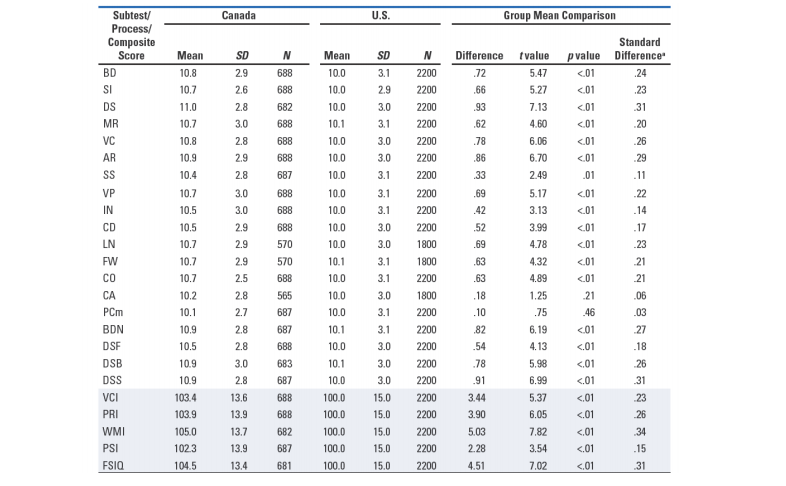
On a scale where American’s average 100 with an SD of 15, Canadian’s have a WAIS-IV full-scale IQ of 104.5 with an SD of 13.4.

Interestingly, American whites score almost as high as Canadians. They have a full-scale IQ of 103.4 with an SD of 14.

If we set the U.S. white mean to be 100 with an SD of 15 (the first IQ tests were normed only on whites), then Canadians have a mean of 101 with an SD of 14.4. So Canadians have virtually identical IQs to American whites. It’s unclear what the IQs of Canadian whites are but I suspect they’re identical to Canadians as a whole.

When should we normalize tests?

Deviation IQ is defined as one’s Z score (relative to the American or white population) on an intelligence test multiplied by usually 15 and added to 100. Z score = (raw score) – (average raw score)/(standard deviation of raw scores).

Occasionally Z scores will be normalized, so instead of being calculated from the above formula, they’re assigned based on percentiles. So if the top 1% of the population scored X and the normal curve says the top 1% has a Z score of +2.33, X will be assigned a Z score of +2.33 regardless of how many actual standard deviations it is above average.

However not all tests need to be normalized. Some should in theory form a very normal curve on their own. Does anyone know which two of the following tests need to be normalized?:

TEST A

A general knowledge test where the author thinks up general knowledge questions ranging in difficulty from very easy to very hard.

TEST B

A general knowledge test where you have to name the faces of the 100 most important people in history as chosen by Michael Hart’s famous book The 100.

TEST C

A spatial test where the author buys a bunch of jig-saw puzzles from the toy store, and your raw score is the number of puzzles you could put together in under 1 minute each.

TEST D

A spatial test where the author buys one jig-saw puzzle from the toy store and your score is simply how many seconds it takes you to solve it (the lower the better)

TEST E

A spatial test where the author buys one jig-saw puzzle from the toy store and your score is the number of pieces you can fit together in one minute.

TEST F

A memory test where your score is the greatest number of syllables in a sentence you can repeat after one hearing.

Update on PATMA norms

If we exclude the 10 known fake votes in the poll of self-reported PATMA scores, 145 people have thus far obtained the following scores:

10,10,10,10,10,10,10,10,10,10,10,10,10,10,10,10,10,10,10,9,9,9,9,9,9,9,9,9,9,9,9,9,9,9,9,9,9,9,9,9,9,9,9,9,9,9,9,9,9,9,9,9,9,8,8,8,8,8,8,8,8,8,8,8,8,8,8,8,8,8,8,8,8,8,8,8,8,8,8,8,8,8,8,8,8,8,8,8,8,8,7,7,7,7,7,7,7,7,7,7,7,7,7,7,7,7,7,7,7,7,7,7,7,7,7,7,7,7,7,7,7,7,7,6,6,6,6,6,6,6,6,6,6,6,6,6,6,6,6,5,5,5,4,4,3

If you copy and paste this data into this wonderful standard deviation calculator, you get a mean of 7.9 and an SD of 1.4

This distribution forms a gorgeous bell curve though it’s truncated because the test is too easy for about the top tenth of my readership:

On a scale where Nothern American whites average 100 with an standard deviation of 15, my readers are known to average about 126 with an SD around 16. Given this info, there are two ways to convert PATMA scores to IQ.

Method 1: Assign each PATMA score its normalized Z score based on its percentile rank among blog readers and multiply said Z score by 16 and add 126.

Method 2: Calculate the actual Z score of each PATMA score (among blog readers) using the observed mean and SD of PATMA scores (7.9 and 1.4 respectively) and multiply said Z score by 16 and add 126.

PATMA score frequency among PP readers percentile rank among PP readers IQ (method 1) IQ (method 2)
10 19 93.45 150 150
9 34 75.17 137 139
8 37 50.69 126 127
7 33 26.6 116 116
6 16 9.66 105 104
5 3 3.08 96 93
4 2 1.38 91 81
3 1 0.69 87 70
2 0     59
1 0     47
0 0     36

Method 1 is clearly better. Are any of my readers intelligent enough to understand why?