Bill Maher’s IQ

The fully vaccinated Bill Maher (who recently made news by getting covid) has always struck me as one of the most intelligent people in public life. It’s long been known that the higher one’s IQ, the less glucose their brain metabolizes during cognitive activity because they take the more efficient path, and Maher seems to really personify that. I love the effortless way he holds court on his weekly HBO show Real Time and before that Politically Incorrect. He’s so smooth the way he transitions from aggressively debating, to making a witty comeback to offering some deserved praise to elegantly laughing at someone else’s joke. He never belabours a point and always knows when to graciously move on with a chuckle. But he also has this arrogant way of looking at guests that just makes them seem stupid (see above photo). He’s also incredibly funny and it’s because he so good at spotting ironies that most of us miss.

And as an extremely wealthy, Ivy League educated, socially liberal, subversive, half Jewish atheist comic talk show host, he belongs to many high IQ demographics.

So what it is his IQ?

One clue is that in a recent interview, he said he graduated 7th out of 400 students in his high school so one in 57 level. But also consider that 10% of his generation dropped out of high school and in his day, these tend to be the worst students, so really he was one in 63.

Of course we don’t know how hard the school was, at least not in 1974 when Maher graduated. But in 2006 it ranked 8th out of 316 public schools (one in 40 level) in New Jersey based on mathematic and literacy proficiency.

If we multiply Maher’s individual ranking (one in 63) by the ranking of the school (one in 40), we get top one in 2,520 level.

Of course there’s more than just IQ involved in school grades and Maher described himself in the interview as a diligent student who showed up for class.

Before 1983, IQ predicted roughly half the variance in school grades (adjusted for range restriction), leaving traits like conscientiousness to explain the rest. Since Maher described himself as “diligent”, and not “very diligent” student, my guess is he was +1 SD in conscientious, not +2 SD. +1 SD implies top one in 6 level.

If prior to 1983, grades could be roughly modeled as the product of diligence and IQ, (Diligence * IQ = Grades), then IQ = Grades/Diligence.

Thus, the rarity of Bill Maher’s IQ = (1/2520)/(1/6) = 1/420

Top one in 420 level equates to an IQ of 142 (U.S. norms) or 141 (white norms) which sounds about right.

Who was right about cold winters: Richard Lynn or Jayman?

Both Richard Lynn and Jayman have argued that cold winters helped select for racial differences in IQ, but both of them also noted that the cold winter explanation was incomplete. For example, the most cold adapted race are the arctic people yet these appear to be somewhat less intelligent than Whites even though their brains are supposedly much bigger than those of Whites.

Richard Lynn resolved this paradox by arguing that because of their low population, Arctic people did not have genetic mutations which increased brain efficiency. So even though Arctic people faced more selection for high IQ than whites did because of the cognitive demands of their colder winters (making clothes, shelter, fire & hunting etc), evolution could mostly just select for bigger brains, while in Whites, selection was weaker but had more ways of making people smart, so more cognitive evolution occurred.

Although this theory makes sense, it appears to be wrong. Davide Piffer’s data shows that Native American (a proxy for Arctic people) score way below whites on polygenic scores for education (a crude proxy for IQ), even though the SNPs used are common in all races.

Jayman on the other hand argued that cold winters selected for brain size (via thermoregulation) but that only those cold adapted big brained races that acquired civilization would evolve high IQ.

The problem with this theory is that if civilization selected for IQ, it would also have also likely selected for brain size (though to a much lesser degree than if brain size were directly selected by the cold) and that doesn’t seem to have happened. Also, if civilization had selected for IQ, then people today would be better at drawing (a crude proxy for IQ) than they were in Upper Paleolithic Europe, and that doesn’t seem to have happened either.

Thus I’ve been forced to propose a third theory. Cold winters both selected for IQ directly (survival skills) and indirectly (big brains keep you warm) but the ratio of direct to direct selection was higher in Whites than in Arctic people because Whites lived in more population dense areas, where resources were running out. By contrast Arctic people (and Native Americans) were had a whole continent to themselves so there was less competition for survival skills, but you still need big heads to keep warm.

The verbal IQ of apes

In his 2006 book, Richard Lynn said chimpanzees “have a vocabulary of around a dozen cries to convey information,
including the presence of predators, intrusion into their territories of neighboring groups, the location of a supply of food, willingness or unwillingness to share food, and so on.”

Using my formula for equating total vocabulary to verbal IQ (Pumpkin Person 2021) a vocabulary of 12 equates to a verbal IQ of 19 (U.S. norms).

Verbal IQ = 0.002(vocabulary) + 19.35827

One problem with this estimate is that humans are socialized by other humans, and thus exposed to far more words than chimps are. A more accurate test of ape ability comes from studies of apes raised by humans. One such ape was Nim Chimpsky who was raised from infancy by humans in an attempt to debunk Noam Chomsky’s theory that only humans can use language.

Wikipedia reports:

While Nim did learn 125 signs, Terrace concluded that he had not acquired anything the researchers were prepared to designate worthy of the name “language” (as defined by Noam Chomsky) although he had learned to repeat his trainers’ signs in appropriate contexts.[2] Language is defined as a “doubly articulated” system, in which signs are formed for objects and states and then combined syntactically, in ways that determine how their meanings will be understood. For example, “man bites dog” and “dog bites man” use the same set of words but because of their ordering will be understood by speakers of English as denoting very different meanings.

One of Terrace’s colleagues, Laura-Ann Petitto, estimated that with more standard criteria, Nim’s true vocabulary count was closer to 25 than 125. However, other students who cared for Nim longer than Petitto disagreed with her and with the way that Terrace conducted his experiment. Critics[who?] assert that Terrace used his analysis to destroy the movement of ape-language research. Terrace argued that none of the chimps were using language, because they could learn signs but could not form them syntactically as language.

So raised by humans Nim had a vocabulary anywhere from 25 to 125, which in my formula equates to a verbal IQ of 19 to 20 (the same as chimps in the wild).

More impressive claims are made for Koko the gorilla which is surprising because although gorillas have bigger brains than chimps, they are less encephalized and more genetically distant from humans.

Wikipedia reports:

Her instructor and caregiver, Francine Patterson, reported that Koko had an active vocabulary of more than 1,000 signs of what Patterson calls “Gorilla Sign Language” (GSL).[4][5] This puts Koko’s vocabulary at the same level as a three-year-old human.[6] In contrast to other experiments attempting to teach sign language to non-human primates, Patterson simultaneously exposed Koko to spoken English from an early age. It was reported that Koko understood approximately 2,000 words of spoken English, in addition to the signs.[7]

2000 words equates to a verbal IQ of 23. But if humans use words in qualitatively superior ways than apes do (syntax) then vocabulary might overestimate ape verbal IQ, because even when humans and apes are matched on vocabulary, the human can put the words in much more meaningful order. On the other hand, it’s largely because apes can’t grasp syntax that their vocabularies stagnate in the first place, so perhaps this measure is reasonable.

Another excuse to play one of my favorite bands:

Total vocabulary and IQ

Contrary to lay opinion, the size of a man’s vocabulary is not only an index of his schooling, but an excellent measure of his general intelligence. Its excellence as a test of intelligence may stem from the fact that the number of words a man knows is at once a measure of his learning ability, his fund of general information and of the general range of his ideas.

From the Measurement and Appraisal of ADULT INTELLIGENCE by David Wechsler 4th edition 1958

One of the great things about using vocabulary as a measure of IQ (or at least verbal IQ) is that like physical measurements, it’s a true ratio scale with an actual zero point.

So how many words does the median young adult know and how does this map to IQ?

From How Many Words Do We Know? Practical Estimates of Vocabulary Size Dependent on Word Definition, the Degree of Language Input and the Participant’s Age by Marc Brysbaert,* Michaël StevensPaweł Mandera, and Emmanuel Keuleers

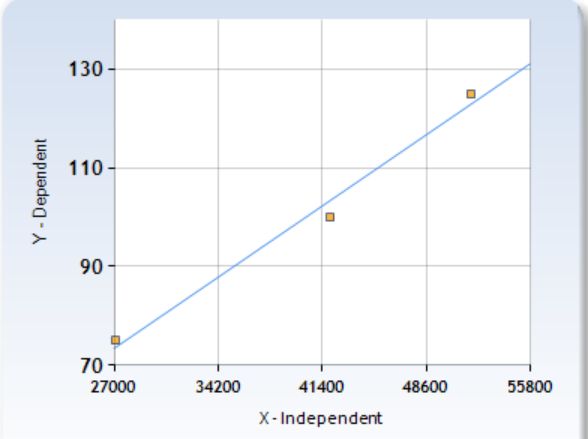
According to the above study, among young U.S. adults, the 5th percentile, 50th percentile and 95th percentile, know 27,100, 42,000, and 51,700 lemmas respectively. These percentiles equate to verbal IQ equivalents of 75, 100, and 125 allowing me to equate total vocabulary to the IQ scale.

Notice how linear the relationship is? Verbal IQ appears to be a true interval scale, at least within 2 SDs from the mean.

ŷ = 0.002X + 19.35827

Verbal IQ is almost a true ratio scale too because notice how 51,700 (verbal IQ 125), is roughly 125% as large as 42,000 (verbal IQ 100). On the other hand, a vocabulary of no words equates to a verbal IQ of 19, and not zero.

It is interesting to ask what would be the verbal IQ equivalent of someone who knew every word in the English language. According to the study data cited above, the maximum number of lemmas is 61,800 which would equate to an IQ of 143. Although 143 is an exceptionally high IQ, it’s absurd to think one in several hundred Americans knows every single word (even on a very superficial level).

Reading the above study further I find:

A first limitation is the list of 61,800 lemmas we used. Although we are reasonably sure the list contains the vast majority of words people are likely to know, there are ample opportunities to increase the list. As indicated above, the Collins scrabble list could be used to more than double the number of entries. We are fairly confident, however, that such an increase will not change much in the words known by the participants (see also Goulden et al., 1990). The words we are most likely to have missed are regionally used common words and recently introduced words.

So if the maximum number of lemmas could be doubled to 123,600, that raises the ceiling of verbal IQ (as measured by total vocabulary) to 267! I doubt anyone could ever score that, unless they have some kind of autistic obsession with reading scrabble dictionaries, in which case the test would be invalid for them.

Over 30 years later, she’s still haunted by the ghost of Rushton

Image found here

In the late 1980s Notisha Massaquoi (who was pretty cute I must say) was the only black student in Rushton’s psychology class at the prestigious University of Western Ontario. In an interview with the fabulous CBC, she states:

When I signed up for the course it was like any other course that I was taking at the school at the time. And what started happening very slowly throughout the course would be small bits of racist ideology being spewed to us. And I equate it to being groomed for the big reveal of his theory, to be honest. So little things like positive stereotypes such as Asian people are extremely bright. But then it started escalating in subsequent classes to things like Black children develop much faster than white babies because they have to be able to become more independent because their families can’t parent appropriately or take care of them. The big day came when Rushton started to reveal what we then come to find out is his theory of racial inferiority and which he proclaimed that we were ranked intellectually with Asian people being more intelligent than whites and Blacks being more or less intelligent than white people.

A student asked at that time, ‘Is this always the case? Can we always guarantee that this will be the case?’ And he then turned to the class and said there is some variation except if you are Black. If you are Black, you are genetically inferior and intellectually inferior to all other races.

WTF? Was Rushton trolling his own students? I know for a fact Rushton believed these putative differences were only on average and that there was genius in every race, so why would he say such a thing?

Maybe he meant that all the black ethnic groups averaged low, while among white and East Asian ethnic groups, there was overlap (e.g. Jews, despite being Caucasoid, are smarter than virtually all Mongoloid ethnic groups), or maybe he was intentionally trying to brainwash his students into feeling superior to even the brightest blacks, or maybe she’s just misremembering what he actually said.

Unless other witnesses from that time period come forward, we may never know.

Rushton’s dismissive attitude towards some of his fans

Interesting video below of Rushton taking questions from his fans. What strikes me is how eloquent and upper class he was, especially when answering the question about Indian Americans:

The Indians that we notice over here are almost higher scorers than white people. They earn more money. They dominate in physics departments, engineering departments of universities, over-represented in information technology, they do extremely well; entrepreneurial and so on.

Rushton’s ability to just rattle off four examples of Indians intelligence (income, academic acumen, technological talent, and business success) while throwing in fancy adjectives like “entrepreneurial”, all with flawless elocution, shows verbal skills on a level that Nobel Prize winning physicist Richard Feynman never came close to achieving.

I noticed too in the conversations I’d have with him, while he would sometimes misunderstand my questions, his answers were always extremely articulate and commonsensical. For example when asked about Oprah’s super sized brain, he replied:

There are always going to be those who are way off in the top 1%, and indeed one would have to be to succeed in a field as competitive as television talk shows

When asked about regression predicting IQ from income:

Billionaires are going to be more intelligent than millionaires who are going to be more intelligent than the middle class, who are going to be more intelligent than welfare recipients. That’s the way the model works.

He was also the best writer of all the prominent HBDers, writing:

Archaic forms of the three main races seem to differ in antiquity.

What a beautiful sentence. Rushton understood the rhythm of language.

Rushton was in a tough position, being a very non-autistic man with a hugely autistic following, and you could see the frustration in the dismissive way he answered some of the questioners in the below video. When one man went on a monologue about accepting high IQ people of all races, Rushton rudely dismissed him with “Okay thanks for the thought”.

It’s almost as if Rushton was angry that non-racist open borders people were among his fans.

He dismisses another questioner with the dumb cliché “It’s hard to make predictions, especially about the future”

Mare of Easttown on HBO

I’m so excited about this new HBO show that I’m literally counting down the hours until debuts. The trailer is really well done and dark.

Don’t know what it is about this show that makes me want to watch so badly. I love watching shows about white people in small towns where everyone knows everyone and all went to high school together.

I love exploring characters who peaked in high school and how they cope with that decades later.

I love the fact that even though the main character is in her 40s, she can still get picked up by a guy in a bar because he realizes he’s no spring chicken himself. I love the fact that even though they’re both in their 40s, they both look kind of good and make a great couple.

I love the fact that the main character can’t stand her mother because judging from the town, her mom’s probably a right-wing wacko who I wouldn’t be able to stand either.

I love the scene where the main character’s little kid is so proud his mom’s a legend in the town “Dey think you a heroooooo!”

And of course, there’s even the obligatory “noble negro” stereotype that offers her salvation at the end of the trailer.

I also love the haunting music.

Estimating a reader’s IQ Part 4: Current psychometric functioning

At this point in the series I wanted to know how the reader would score on tests that he did not select for himself but that I chose for him. I figured a good measure of overall IQ would consist of at least 3 major cognitive domains, so the domains I selected were Verbal, Visual, and Numerical. To assess these three domains, the tests I chose were Vocabulary from the ancient WBI, Mug of Pee’s Gestalt, and the PATMA. These tests were chosen because they’re all quick, highly g loaded and normed by me personally.

Vocabulary from the ancient WBI: Verbal IQ 138 (mild genius)

Long before the WAIS or WISC, there was the WechslerBellevue Intelligence Scale. Originally Vocabulary was considered too culturally biased to be one of the core subtests, but was used as an alternate subtest. Wechsler randomly selected words from the dictionary that were then tried out on groups of people of known intelligence. Those words that best discriminated between the bright and dull were included in the final selection of 42 words that were used in the 1937 standardization.

When the reader was given rare access to this ancient list, he got full credit (1 point) for 34 of the 42 words and partial credit (0.5 points) for 2 of them, giving him a raw score of 35 out of 42. This equated to +1.66 SD among Wechsler’s 1937 sample of young adult White New Yorkers (selected to be representative of white Americans as a whole), however by the 21st century, many of the words on the list have become impossibly difficult, so using modern white norms, the reader’s score is +2.4 SD. But since the white population of the U.S./Canada has a slightly different IQ distribution from that of the overall U.S. population, it equates to +2.5 SD or IQ 138 (U.S. norms). This is remarkably consistent with a historiometric estimate of the reader’s vocabulary based on his kindergarten teacher’s subjective impression.

Mug of Pee’s Gestalt: Visual IQ 95 (average range)

Mug of Pee’s Gestalt was normed on a random sample of 15 white Ontarians. When the reader was asked to take this test his self-reported score was -0.66 SD below the norming sample’s mean. Unfortunately, education level for this sample was not obtained so it’s unclear if the Ontarians were representative of Canadians as a whole or Ontarians specifically. This is important because on achievement tests, Ontarians outperform the rest of Canada (at least in childhood), but it’s not clear if this difference would map to fluid IQ measures like Gestalt.

Assuming that on a scale where Americans have a mean of 100 and an SD of 15, the Ontarians, like Canadians on the whole score 103.9 (SD = 13.9) on perceptual reasoning tasks, the reader’s score would equate to an IQ of 95. This is perhaps not surprising because the reader’s psychometric history showed his lowest score on Paul Cooijmans’s spatial test and there’s no historiometric evidence of spatial precociousness.

The reader also self-reported a high score on Cooijmans’s aspergoid test. Although my amateur clinical impression just from reading a few of his emails is that the reader is not autistic, his relatively low Gestalt might suggest otherwise because one theory is autistics lack big picture thinking. More testing is needed to confirm or debunk this hypothesis.

The PATMA: Numerical IQ 131 (mild genius)

The PATMA is a quick test of lateral mathematical reasoning that appears to be exceptionally g loaded. The reader self-reports a score of 8 out of 10. Based on 11 (mostly self-reported) score pairs from people who have taken both the PATMA and (abbreviated) WAIS-III/WAIS-IV (roughly corrected for old norms) a score of 8 is now equating to an IQ of 131.

Overall global intellectual ability: Full-scale IQ 131 (mild genius)

It’s hard to calculate a composite score without knowing the intercorrelation of the above three tests, but a rough approach is as follows: The average score of the reader on these three tests is +1.42 SD (U.S. norms). If you average +1.42 SD on the 10 core WAIS-IV subtests, your full-scale IQ is 131. If we assume the above 3 tests are statistically equivalent to a random sample of WAIS-IV subtests, an overall IQ of 131 is implied.

Estimating a reader’s IQ Part 3: Psychometric history

In this series I’ve been estimating a reader’s IQ using different methods, and now in part 3 we examine his psychometric history. Psychometric history is especially important in forensic cases where criminals may have faked their current low scores to avoid culpability, so they need to be corroborated by past scores.

The reader wrote:

My ‘reading level’ was assessed at 4th grade when I was in the 3rd grade, and 5th grade when I was in the 4th grade.

Unfortunately claims like this are ambiguous because “reading level” is not defined. Does reading at a 8th grade level mean reading like the average 8th grader? I don’t think so because even half of U.S. adults can’t read at an 8th grade level, so maybe these grade levels are relics from an era when only elites made it to high school.

The reader the provides a less ambiguous statement:

At 13 I was given a reading comprehension test and told that I was on the same level as the average college freshman.

Americans with “some college (13 -15 years of education)” have an average IQ of 102 (U.S. norms). Americans who graduate college (16+ years of education) have an average IQ of 111. College freshman eventually enter either of these categories so let’s split the difference and assume they have an average IQ of 107 (68 percentile).

Of course reading comprehension and IQ are not identical, but they are so highly correlated that we’d expect college freshman to be around the same percentile on both (for young adults).

If average college freshman reading skill is at the 68th percentile for young adults, what percentile is it at for 13-year-olds? I don’t have data on reading comprehension per se, but using vocabulary as a proxy, the WAIS-R and WISC-R manuals show that a vocabulary score that would put you between the 63rd to 75th percentile among 18 to 19-year-olds, would put you at the 95th to 98th percentile among 13-year-olds. So we might guess that the reader had a reading IQ of 128.

The reader also wrote:

The mean of my scores on Paul Cooijmans’ tests is 131. The median is, I believe, identical. My highest score is 148 and my lowest is 118 (excluding one spatial test on which my raw score was 0).

A raw score of 0 on Cooijman’s spatial test probably equates to an IQ of 103 or less.

The reader states:


My US Mensa ‘pretest’ score was 120. This was the first I.Q. test that I took as an adult. My [redacted by pp, 2021-04-14] score was 130 (137 verbal, 118 performance). I won’t mention any other online tests because they probably aren’t even remotely credible.

I redacted the name of one of the test’s he took because in my opinion, that test gives people too much exposure to the type of content on professional tests, and thus could compromise them.

So it looks like on credible tests, his scores range from 103 or less, all the way up to 148. Assuming his highest and lowest score were on tests that correlate about 0.7 (typical correlation between different IQ tests), 128 is what his real IQ is likely to be. Perhaps lower, since his lowest score suffered from floor bumping, but not much lower since his lowest score was an outlier.

Estimating a reader’s IQ Part 2: Historiometrics

In my last article I used the demographic approach to estimate a reader’s IQ. This is used when you lack psychometric data, but you know other details statistically related to test scores. This method is most often used when dementia is suspected but the patient has no psychometric history, thus the only way to check if cognition has declined is to estimate the expected level of past IQ. Such estimates are made from demographic variables like education, occupation and race, but I like to add physical variables like head size, height, body mass index etc, hence I renamed it bio-demographics.

In part 2 we take a historiometric approach. Like the biodemographic approach it’s also used when we don’t have test scores per se, but we do have a cognitive history amenable to quantitative analysis. For example if I know you learned to read at age 5, while the average kid can’t learn until 6, I might estimate your IQ is 120, since you were cognitively functioning at 120% your age level.

Another example might be when Homo Erectus was said to have the mind of a modern European 7-year-old because the tools they made could not be learned by children younger. This might also be called cognitive archeology, a term James Flynn used.

The reader wrote:

I was precocious only with respect to verbal ability. My kindergarten teacher evidently told my mother that I had the most extensive vocabulary of any child she had taught in a 20 year period. Her typical class probably consisted of 20 students, so I take this to mean that I had the most advanced vocabulary out of ~400. Half of the students at this school were white, and the other half black.

Of course being at the one in 400+ level at this particular school is not necessarily equivalent to being at the one in 400+ level for Americans as a whole, especially since the racial distribution of this school is not typical.

Since half the school is white, we can guess he was at the one on 200+ level among the white students, however because of systemic racism, upper class whites send their kids to white schools, leaving the children of the lower class to attend largely black schools.

On page 63 of Charles Murray’s Coming Apart he notes that whites with only a high school diploma average IQ 99 (U.S. norms) and those with even less average IQ 87. Splitting the difference, IQ 93 was perhaps the mean of white parents of students at this school.

But given the 0.5 IQ correlation between parents and their children, we’d expect the children of these white parents to progress 50% to the national white mean (IQ 103), thus the white students likely averaged IQ 98.

Assuming a standard deviation of about 15 we’d expect the one in 200+ level (+2.5 SD) to be IQ 136+.

So our historiometric estimate of the reader’s IQ (136+) is somewhat higher than the bio-demographic one (127).