• About

Pumpkin Person

~ The psychology of horror

Pumpkin Person

Tag Archives: Raven Progressive Matrices

Why does shared environment affect some IQ tests more than others?

04 Saturday Apr 2020

Posted by pumpkinperson in Uncategorized

≈ 131 Comments

Tags

Arthur Jensen, Cattel-Horn-Caroll, Does Your Family Make You Smarter?, fluid vs crystallized, heritability, IQ, James Flynn, Raven Progressive Matrices, shared environment

Using twin studies, scientists divide phenotypic variation into three categories: DNA variation, shared environmental variation, and unshared environmental variation. Shared environment are all the experiences MZ twins reared together have in common (same upbringing, same schools, same womb) while unshared environment are all the experiences they don’t share (position within the womb, getting hit on the head, having an inspiring teacher).

The best estimate using massive datasets suggest that within Western democracies, DNA explains 41% of IQ variation at age 9, 55% at age 12, 66% at age 17, and 74% in adulthood. By contrast shared environment explains 33% at age 9, 18% at age 12, 16% at age 17, and 10% in adulthood (Bouchard 2013, figure 2). That leaves unshared environment explaining 26% of the variation at age 9, 27% at age 12, 19% at 17, and 16% in adulthood.

You don’t have to believe these associations are causal, but they are real. They’ve been more or less replicated using studies comparing (1) MZ twins with DZ twins, (2) MZ twins raised apart, (3) unrelated people reared in the same home. Although all of these methods depend of different assumptions, they all converge on the same conclusion: the predictive power of DNA skyrockets from childhood to adulthood while the predictive power of shared environment plummets. The same pattern (known as the Wilson effect) has also been observed for other phenotypes and in other species.

But why? Shouldn’t environment get more important as we age since experience has increasing time to accumulate? One theory is that more and more genes become active as we age. A more popular theory is that we select environments that maximize our genotype, so environment becomes just a magnifier of genes, not a causal force in its own right. So genetically smart people will stay in school and genetically strong people will lift weights and take steroids etc. People invest in where they’re more likely to be rewarded.

But here’s where things get really interesting. The Wilson effect behaves differently on different types of IQ tests. In his book Does your Family make you smarter? James Flynn notes that cognitive inequality increases from childhood to later adulthood (because good genes cause good environments and bad genes cause bad environments, the smart get smarter and the dumb get dumber, relative to the average person their age) but this pattern is much more pronounced on some tests than others.

Flynn describes three types of tests:

  • Type 1: Tests that show large family effects (shared environment) that decay slowly. This include tests involving vocabulary (define “rudimentary”), general knowledge (How old is the Earth?) verbal abstraction (how are a brain and a computer the same?) and social comprehension (why do you need a passport to travel?)
  • Type 2: Tests that show small family effects that decay fast. These include spatial manipulation (use these two triangles to make a square) and noticing incongruities (what’s missing or absurd in a picture of a common object or scene).
  • Type 3: Tests that show that large family effects that decay fast. These tests include clerical speed and arithmetic.

Flynn argues that type 1 tests involve skills that children learn from observing their parents talk, hence the large family effect. By contrast he says of type 2 tests:

Aside from the occasional jigsaw puzzle, they have no part in everyday life. Children never see their parents performing these cognitive tasks as part of normal behavior. Family effects are weak, even among preschoolers. Since these subtests match environment with genetic potential so young, they would be an ideal measure (for, say, 5-year-olds) of genes for intelligence.

From pages 53-54 of Does Your Family Make You Smarter? by James Flynn

In other words, Type 2 tests measure “novel problem solving”, while type 1 tests measure acquired abilities. A more provocative interpretation is type 2 tests measure real intelligence, while type 1 just measure knowledge and experience. This is the age-old distinction between aptitude tests vs achievement tests, culture fair vs culture loaded, fluid vs crystallized.

And yet Flynn largely rejects Cattell-Horn-Carroll’s theory that fluid ability (novel problem solving) is invested to acquire crystallized ability (accumulated knowledge) writing:

…fluid skill is just as heavily influenced by family environment as the most malleable crystallized skill (vocabulary) and therefore, neither skill deserves to be called an investment and the other a dividend.

From page 132 of Does Your Family Make You Smarter? by James Flynn

Flynn of course is referring to the greatest irony in the history of psychometrics and the biggest mistake of Arthur Jensen’s career: the Raven Progressive Matrices (long worshiped by Jensen and Jensenistas as the most culture fair measure of pure intelligence ever invented) is a type 1 test!
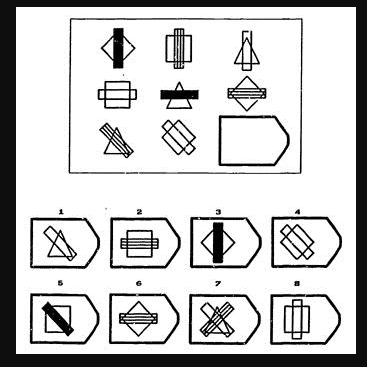
Which of the 8 choices completes the above pattern? Image from  from Carpenter, P., Just, M., & Shell, P. (1990, July)

But let’s not throw the baby out with the bath water. There’s no need to abandon CHC investment theory just because a major test got mischaracterized. But at the same time, it doesn’t feel right to reclassify the Raven as a crystallized test, Research is needed to understand why the Raven is so culturally sensitive when it superficially looks like a measure of novel problem solving. Is it measuring some kind of implicit crystallized knowledge we’re not conscious of like being familiar with patterns, columns and rows and reasoning through the process of elimination, or are the family effects on the non-cognitive part of the test (having the motivation to persist and concentrate on such an abstract task). Flynn argues that the brain is like a muscle, but if so, the Raven is an exercise most have never done before, so why isn’t it a type 2 test?

Flynn might argue that if your family helped you with abstract problems in algebra or had philosophical discussions about hypothetical concepts, you’ve been exercising for the Raven all your life, but this seems like a bit of a stretch. All the research shows that cognitive training has narrow transfer (i.e. practicing chess will only make you slightly better at checkers, and not at all better at scrabble) though perhaps the Raven’s uniquely abstract (general) nature allows it to slightly buck this trend.

Share this:

  • Click to share on X (Opens in new window) X
  • Click to share on Facebook (Opens in new window) Facebook
Like Loading...

Answering reader questions part 5

06 Sunday Jan 2019

Posted by pumpkinperson in Uncategorized

≈ 32 Comments

Tags

ancient Greeks, Raven Progressive Matrices

Commenter Loaded writes:

 I just had a question about what you think the IQ estimates for different civilizations would be, particularly Greek, Roman, Mayan/Aztec, Han Chinese, etc?
Also, do you think Raven’s Matrices is a good indicator of spatial ability? Do you think it is easier to structure concepts using a far more complex framework if you have high spatial ability?
If I have any other questions, Santa Pumpkin, I’ll be sure to ask, because your gift giving this year is giving all of us peace on Earth. Thank you!

I can’t comment on the other groups you mentioned, but my sense is that the ancient Greeks were about as intelligent as the Victorian British.  As Anatoly Karlin has noted, they did not have the inbreeding problem other populations have suffered from and their height (and by inference nutrition needed for brain development) was around 5’7″ (in men) which is similar to 19th century Brits.  I think the rare combination of being ahead of their contemporaries in both genomic IQ (more outbreeding) and environmental IQ (good health and nutrition) made their phenotypic IQs conspicuously high for their time.

As for the Raven; I I think it measures spatial ability but not especially well.  It’s more of a conceptual test.  Indeed on the WISC-V it’s not even part of the spatial sub-scale, but instead part of the fluid reasoning index (though that’s a misnomer since spatial ability itself is fluid).

Share this:

  • Click to share on X (Opens in new window) X
  • Click to share on Facebook (Opens in new window) Facebook
Like Loading...

contact pumpkinperson at easiestquestion@hotmail.ca

Recent Comments

austin slater's avataraustin slater on Which better predicts populati…
RaceRealist's avatarRaceRealist on Which better predicts populati…
God's Word's avatarGod's Word on Which better predicts populati…
pumpkinperson's avatarpumpkinperson on Which better predicts populati…
RaceRealist's avatarRaceRealist on Which better predicts populati…
Anime's avatarAnime on Which better predicts populati…

Archives

  • December 2025
  • November 2025
  • October 2025
  • September 2025
  • August 2025
  • July 2025
  • June 2025
  • May 2025
  • April 2025
  • March 2025
  • February 2025
  • January 2025
  • December 2024
  • November 2024
  • October 2024
  • September 2024
  • August 2024
  • July 2024
  • June 2024
  • May 2024
  • April 2024
  • March 2024
  • February 2024
  • January 2024
  • December 2023
  • November 2023
  • October 2023
  • September 2023
  • August 2023
  • July 2023
  • June 2023
  • May 2023
  • April 2023
  • March 2023
  • February 2023
  • January 2023
  • December 2022
  • November 2022
  • October 2022
  • September 2022
  • August 2022
  • July 2022
  • June 2022
  • May 2022
  • April 2022
  • March 2022
  • February 2022
  • January 2022
  • December 2021
  • November 2021
  • October 2021
  • September 2021
  • August 2021
  • July 2021
  • June 2021
  • May 2021
  • April 2021
  • March 2021
  • February 2021
  • January 2021
  • December 2020
  • November 2020
  • October 2020
  • September 2020
  • August 2020
  • July 2020
  • May 2020
  • April 2020
  • March 2020
  • February 2020
  • January 2020
  • December 2019
  • November 2019
  • October 2019
  • September 2019
  • August 2019
  • July 2019
  • June 2019
  • May 2019
  • April 2019
  • March 2019
  • February 2019
  • January 2019
  • December 2018
  • November 2018
  • October 2018
  • September 2018
  • August 2018
  • July 2018
  • June 2018
  • May 2018
  • April 2018
  • March 2018
  • February 2018
  • January 2018
  • December 2017
  • November 2017
  • October 2017
  • September 2017
  • August 2017
  • July 2017
  • June 2017
  • May 2017
  • April 2017
  • March 2017
  • February 2017
  • January 2017
  • December 2016
  • November 2016
  • October 2016
  • September 2016
  • August 2016
  • June 2016
  • February 2016
  • January 2016
  • November 2015
  • May 2015
  • January 2015
  • December 2014
  • November 2014
  • October 2014

Categories

  • ethnicity
  • heritability
  • income
  • Oprah
  • Uncategorized

Meta

  • Create account
  • Log in
  • Entries feed
  • Comments feed
  • WordPress.com

Recent Comments

austin slater's avataraustin slater on Which better predicts populati…
RaceRealist's avatarRaceRealist on Which better predicts populati…
God's Word's avatarGod's Word on Which better predicts populati…
pumpkinperson's avatarpumpkinperson on Which better predicts populati…
RaceRealist's avatarRaceRealist on Which better predicts populati…
Anime's avatarAnime on Which better predicts populati…

Archives

  • December 2025
  • November 2025
  • October 2025
  • September 2025
  • August 2025
  • July 2025
  • June 2025
  • May 2025
  • April 2025
  • March 2025
  • February 2025
  • January 2025
  • December 2024
  • November 2024
  • October 2024
  • September 2024
  • August 2024
  • July 2024
  • June 2024
  • May 2024
  • April 2024
  • March 2024
  • February 2024
  • January 2024
  • December 2023
  • November 2023
  • October 2023
  • September 2023
  • August 2023
  • July 2023
  • June 2023
  • May 2023
  • April 2023
  • March 2023
  • February 2023
  • January 2023
  • December 2022
  • November 2022
  • October 2022
  • September 2022
  • August 2022
  • July 2022
  • June 2022
  • May 2022
  • April 2022
  • March 2022
  • February 2022
  • January 2022
  • December 2021
  • November 2021
  • October 2021
  • September 2021
  • August 2021
  • July 2021
  • June 2021
  • May 2021
  • April 2021
  • March 2021
  • February 2021
  • January 2021
  • December 2020
  • November 2020
  • October 2020
  • September 2020
  • August 2020
  • July 2020
  • May 2020
  • April 2020
  • March 2020
  • February 2020
  • January 2020
  • December 2019
  • November 2019
  • October 2019
  • September 2019
  • August 2019
  • July 2019
  • June 2019
  • May 2019
  • April 2019
  • March 2019
  • February 2019
  • January 2019
  • December 2018
  • November 2018
  • October 2018
  • September 2018
  • August 2018
  • July 2018
  • June 2018
  • May 2018
  • April 2018
  • March 2018
  • February 2018
  • January 2018
  • December 2017
  • November 2017
  • October 2017
  • September 2017
  • August 2017
  • July 2017
  • June 2017
  • May 2017
  • April 2017
  • March 2017
  • February 2017
  • January 2017
  • December 2016
  • November 2016
  • October 2016
  • September 2016
  • August 2016
  • June 2016
  • February 2016
  • January 2016
  • November 2015
  • May 2015
  • January 2015
  • December 2014
  • November 2014
  • October 2014

Categories

  • ethnicity
  • heritability
  • income
  • Oprah
  • Uncategorized

Meta

  • Create account
  • Log in
  • Entries feed
  • Comments feed
  • WordPress.com

Create a free website or blog at WordPress.com.

Privacy & Cookies: This site uses cookies. By continuing to use this website, you agree to their use.
To find out more, including how to control cookies, see here: Cookie Policy
  • Subscribe Subscribed
    • Pumpkin Person
    • Join 686 other subscribers
    • Already have a WordPress.com account? Log in now.
    • Pumpkin Person
    • Subscribe Subscribed
    • Sign up
    • Log in
    • Report this content
    • View site in Reader
    • Manage subscriptions
    • Collapse this bar
 

Loading Comments...
 

    %d