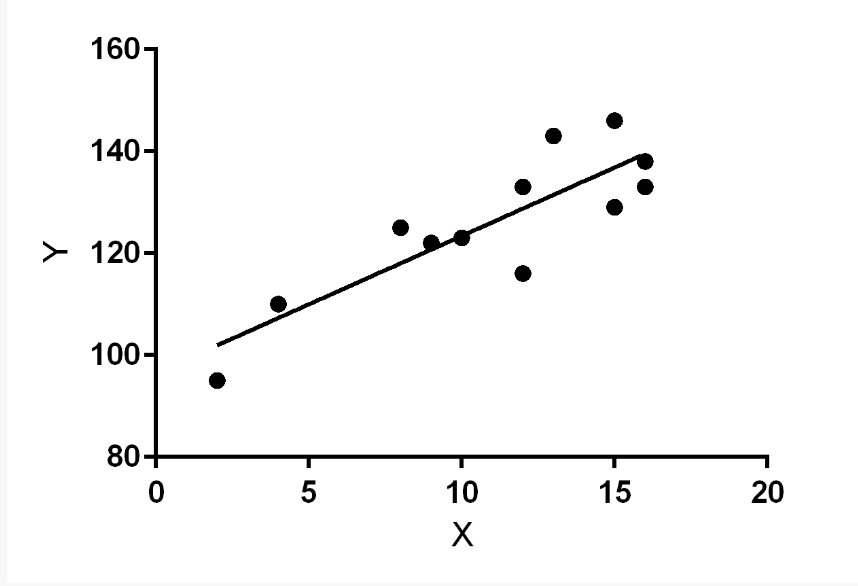
I now have data on nine people who have taken both my jig-saw and an undergraduate college admission test (SAT/ACT).
Because age has an acute effect on jig-saw, I converted all jig-saw scores to age adjusted jig-saw scores by deducting 0.33 points points for each year below 32 you are when you took the test (up to a maximum of seven years). I also added 0.33 points for each year above 32 (no maximum).
Thus if you only solved the red puzzle (six pieces) and thus got a score of 6, but you’re 60-years-old (28 years above 32) your age adjusted score becomes 6 + 0.33(28) = 15.
Then using equipercentile equating, I equated the nine age adjusted jig-saw scores with the IQ equivalents of the SAT/ACT scores in the same sample.
The result is the following formula for deriving spatial IQ (U.S. norms) from age adjusted iig-saw puzzle scores:
Spatial IQ = 2.01(age adjusted jig-saw score) + 71.16
To be clear, age adjusted score is simply the score you would have got if you too the test at 32. If you are 32, no need to age adjust.
I other words (at age 32):
Red 0 to 6 pieces: spatial IQ 71 to 83 (U.S. norms)
Yellow 8 pieces: spatial IQ 87
Green 10 pieces: spatial IQ 91
Blue 15 pieces: spatial IQ 101
Bronze 20 pieces: spatial IQ 111
Silver 24 pieces: spatial IQ 119
Gold 30 pieces: spatial IQ 131
If future research replicates these studies, the results have vocational implications. For example, in the past if you had a verbal IQ of 110 and a spatial IQ of 110, it would make just as much sense to pursue a verbal career as a spatial one, since you’re at the 75th percentile in both domains.
However because my jig-saw test like my crossword test before it, has arguably a true 0 point (no ability to join any pieces in 2 minutes), I can arguably say someone with both a verbal and spatial IQ of 110 is twice as verbally smart as the average person, but only 33% smarter spatially. Thus despite being equally ranked in both domains, they’ll be much more dominant verbally. This may help explain why people with high verbal IQs make more money on average than their spatially gifted counterparts.