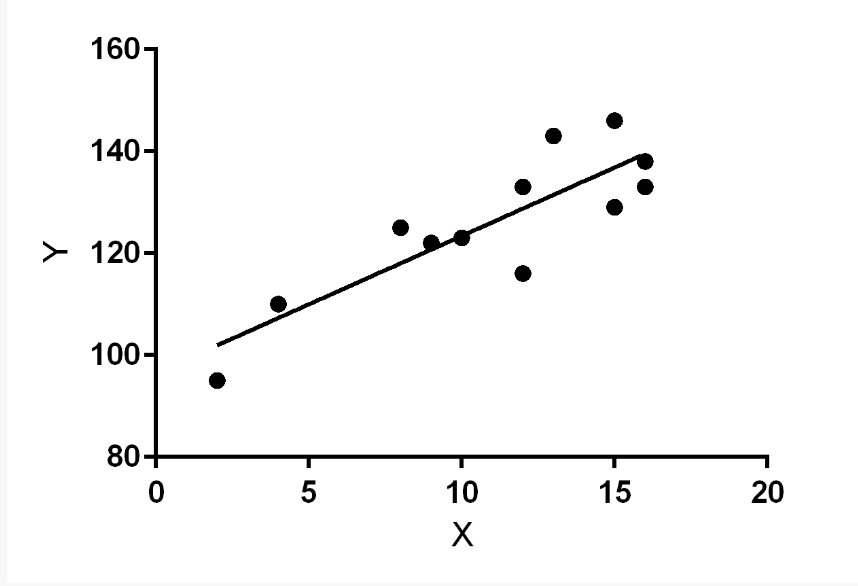
I now have data on 12 people who have taken both my crossword puzzle and a well normed verbal intelligence test (SAT verbal, Wechsler verbal index, WAIS-IV Information, WAIS-IV Similarities). Nine of these people are self-reported scores from readers and three are from family members I personally witnessed taking both the crossword and a verbal test. The Pearson r correlation between the crossword scores and the verbal intelligence test scores is an astonishing 0.86 confirming once again that vocabulary is a powerful test of IQ.
When all the verbal test scores are converted to the Wechsler IQ scale (U.S. mean = 100; SD = 15) and plotted along the Y axis, and crossword scores (out of 17) are plotted on the X axis, we get a remarkably linear relationship.
The sample has a mean verbal IQ equivalent of 126 (SD 13.8) and a mean crossword score of 11 (SD 4.4). From here we can make some rough equivalencies:
0 = verbal IQ 92
1 = verbal IQ 95
2= verbal IQ 98
3 = verbal IQ 101
4 = verbal IQ 104
5 = verbal IQ 108
6 = verbal IQ 111
7 = verbal IQ 114
8 = verbal IQ 117
9 = verbal IQ 120
10 = verbal IQ 123
11 = verbal IQ 126
12 = verbal IQ 129
13 = verbal IQ 132
14 = verbal IQ 135
15 = verbal IQ 139
16 = verbal IQ 142
17= verbal IQ 145
Because all the words in the crossword were selected at random and thus have a true zero point (retrieving none of the words in the sample), we can say some interesting things about the distribution of receptive vocabulary. Someone with a verbal IQ of 111 (average U.S. university graduate) has roughly twice the receptive vocabulary of the average American.
Someone with a verbal IQ of 120 (average person with advanced degree) has roughly triple the receptive vocabulary of the average American. These large gaps help explain why society is so stratified along educational and occupational lines.
These norms probably work best for people just under 40. Those above 40 may deserve a bonus of perhaps 1 IQ point a decade since retrieval ability declines with older age.
I created a very special crossword puzzle. In order to take it you must register by giving a first and last name but you don’t have to use your real name or even the pseudo-name we know you by, but whatever name you choose, please write it down somewhere safe so you’ll remember it for next time I post one of these tests which will likely be very soon.
By using the same name every time you take a test, not only can you build a diagnostically informative cognitive profile, but you allow me to calculate how well my tests intercorrelate.
So what makes this crossword puzzle so special? I created it by selecting 17 words completely randomly from the English language. The crossword clue for each word was simply each word’s definition from the most authoritative dictionary.
Because the words were completely chosen at random and thus are a representative sample of all English words, a perfect score means you can retrieve close to 100% of the English language from seeing just the definitions and a 0 score means you can retrieve close to zero percent.
Further, because this test has a true zero point, someone who scores 4 out of 17 has arguably twice the receptive vocabulary as someone who scored 2 who has twice the receptive vocabulary as someone who scored 1. This is rare chance to study the true distribution of cognition on an absolute scale.
Crucial to Rushton’s hypothesis was the idea that evolution is progressive and that some populations are more advanced than others. Rushton noted that newer forms of life tend to be bigger brained and more complex than their archaic ancestors.
Applying this logic to humans, Rushton became an early supporter of the Out of Africa model of human origins. This was ironic because the theory is usually associated with anti-racists who argue such a recent sub-Saharan origin for our species makes us all African under the skin. Rushton however used it to argue that Negroids branched off the evolutionary tree prematurely (200 kya) and Mongloids being the most recently emerged race (40 kya) are new and improved.
Although Rushton cited genetic studies from the 1980s, 40 years later his evolutionary sequence holds up though the exact splitting dates might be disputed.
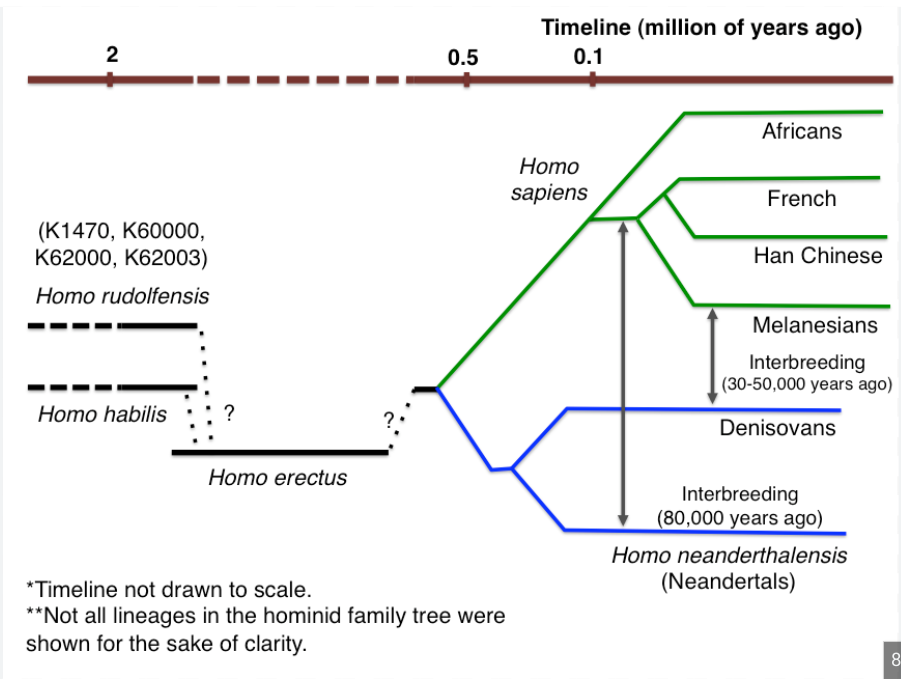
There is however a problem with Rushton’s model. If instead of looking at the three main races in the human species, we look at the three main species in the Homo genus, I’ve noticed modern humans branched off before Denisovans or Neanderals. To quote my bitchy 10th grade science teacher who was one of the few people to truly get it: “if you’re the first branch, and you don’t do anymore branching, then you’re less evolved than higher branches.”
So are we less evolved than Neanderthals and Denisovans and if so, how does this square with us being so superior? Well we can start by noting that evolvement is only a proxy for progress, there’s no reason to expect a perfect correlation. It’s only when you step back and look at the big picture does progress seem inevitable.
Secondly, we split from the ancestors of Neanderthals and Denisovans over half a million years ago, and only in the last 50,000 years did we show any kind of superiority. On the contrary, maybe they were superior because they occupied most of the World while we were confined to Africa and every time we tried to leave, they’d force us to retreat. Only in the Upper Paleolithic did we finally pull ahead.
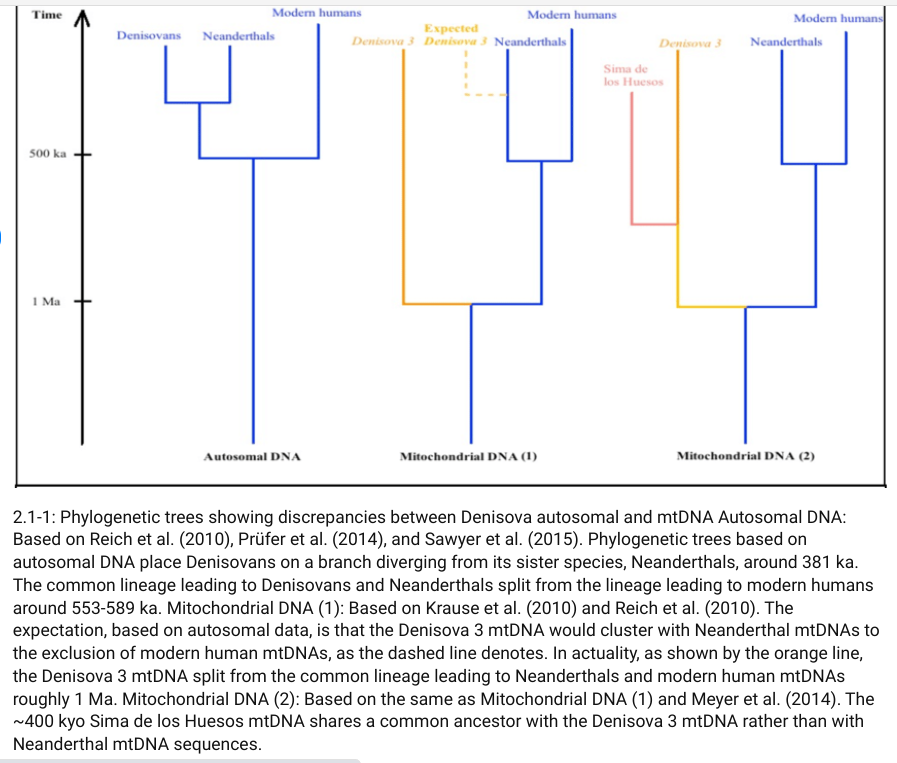
Thirdly, the data might simply be wrong. Other genetic models show Denisovans branching off first:
Psychologists have long divided IQ variance into three major parts:
Genes (measured by subtracting the IQ correlation of DZ wins raised together from the correlation of MZ twins raised together and then doubling the result or simply the correlation of MZ twins raised apart)
Shared environment (measured by subtracting the IQ correlation of siblings raised apart from the correlation between siblings raised together or simply the IQ correlation of unrelated people raised together)
Non-shared environment (measured from subtracting the IQ correlation of MZ twins raised together from the correlation between the same person tested twice).
One thing both Arthur Jensen and James Flynn agreed on was that the role of genes roughly doubled from about 40% of the variance in early childhood to 80% in later adulthood. To make room for this doubling, the role of shared environment shrank from roughly 40% in early childhood to 0% in later adulthood.
Meanwhile the effect of non-shared environment remains constant at 20% throughout the life span.
Flynn believed non-shared environment was just luck, and since luck by definition is random, it can’t favor adults or children on average which explains why it stays 20% while the other sources of variance rise and fall. Flynn also implied (though I don’t want to take him too literally) that non-shared environment was “free will”. By this I assume he meant, we don’t choose our genes or the homes we are raised in, but that 20% IQ variance that remains is up to us.
Jensen also believed non-shared environment was luck but he viewed it as specifically biological luck, writing:
a large part of the specific environmental variance appears to be due to the additive effects of a large number of more or less random and largely physical events— developmental “ noise” — with small, but variable positive and negative influences on the neurophysiological substrate of mental growth
Now what’s interesting is Jensen not only believed that 80% heritability applied to differences within U.S. races, but also to differences between them. He called this the default hypothesis because if we don’t know what’s causing the IQ difference between races, the default should be that it’s the same cause as within them: Occam’s razor.
In 2006, Rushton & Jensen wrote:
Shuey’s (1966) compendium to document that the average Black-White difference was 0.70 standard deviations in early childhood, 1.00 standard deviations in middle childhood, and 1.20 standard deviations in early adulthood….Until the results of several such studies allow reassessment of the situation, the best estimate of Black-White convergence over the past 100 years is between 0 and 3.44 IQ points – a maximum effect size of 0.23 – well within the predictions of our estimated heritability of .80 for the Black-White g difference in the United States
In would have been nice if Rushton and Jensen had shown their math. Maybe their logic was, if 80% of the IQ variance is genetic, and 20% is non-shared environment, and the square root of 20% is 0.45, then we can at most expect the black-white IQ gap to shrink by 45%. So if the gap was originally 1.1 standard deviations (17 IQ points) in WWI, the most it could shrink by would be 1.1SD(0.45) = 0.5 SD or 9 points.
On the other hand, if genes explain 80% and the square root of that is 0.89, then the black-white gap should never shrink to less than 0.89(1.1 SD) = 0.98 SD = 15 points.
Something’s not adding up.
But there’s another problem with Jensen’s elegant default hypothesis. If non-shared environment is luck as Flynn and Jensen implied, how can it differ at all between races? Luck by definition is random so an entire race can not be lucky or unlucky. Rather the lucky and unlucky members of both races should cancel each other out leaving the non-shared environment equal and genes as the only cause of the racial IQ gap.
I’ve been a huge fan of this woman since she LOUDLY OPPOSED the Afghanistan War BEFORE IT BEGAN. Not only do I support her dovish foreign policy, but I agree with her support for unions. This may come as surprise for a free market capitalist, but if employers can organize and form a unified negotiating block (which is what a corporation is) logic dictates that workers can do the same. To suggest otherwise promotes supply/demand asymmetry which violates the free market.
And even though I believe the U.S. black-white IQ gap is at least 100% genetic, I support Marianne’s call for slavery reparations. Being smarter than another race does not give you the moral right to enslave them, and if Germans gave reparations to Jews over the Holocaust, why shouldn’t America give reparations to the descendants of American slaves? However one could argue that reparations have largely already been paid in the form of affirmative action and other social programs, so we would need a team of economists to do the math. However I believe that even if white Americans gave 100% of their wealth to black Americans, within a few generations, whites would once again be richer because HBD.
I strongly disagree with Marianne on a wealth tax for people worth over $50 million, not because I think the rich deserve all the money they have, but rather because once you own something, you should not have to pay taxes on it. This also applies to property tax which I also oppose.
The way to get the rich to pay their fair share is to tax capital gains and inherited wealth the same way you tax earned income and to strengthen unions so that corporations can’t get so rich in the first place.
Despite being Negroid in skin color, even the blackest Indians are often 100% Caucasoid in facial structure and hair texture
Popular stereoypes, as well as psychometric and historical data, had left me with the impression that South Asians were more intelligent than sub-Saharans. For starters, South Asians had left Africa. had created an arguably independent civilization and were part of the Caucasoid race. In addition, immigrants from India are overachievers in North America.
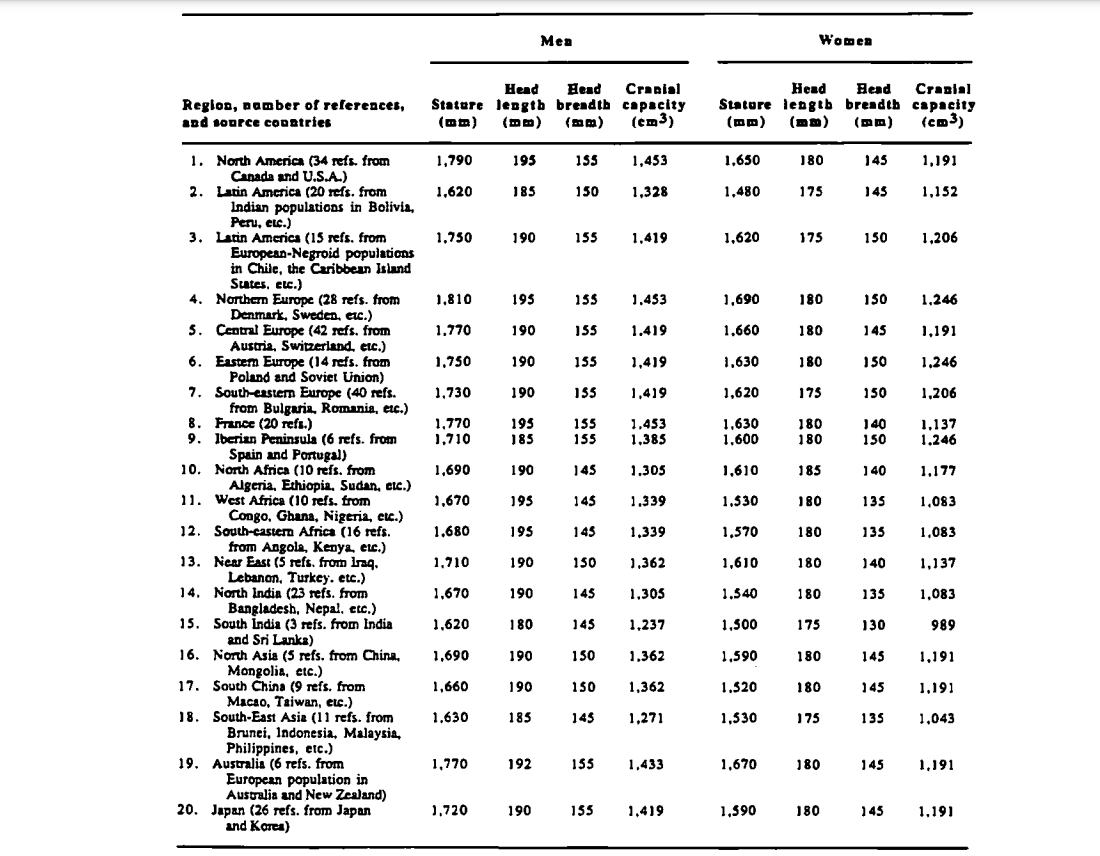
So imagine my surprise when I started noticing that Indians appear to have smaller brains than sub-Saharans. At first I didn’t notice this because HBDers like Rushton and Lynn would lump South Asians in with Caucasoids or Middle Easterners respectively, or just ignore them completely.
However an excellent data-set analyzed by Rushton showed that North Indian and South Indian men averaged 1305 cm3 and 1237 cm3 respectively. Splitting the difference, this suggests an Indian man mean of 1271 cm3. By contrast, West African men averaged 1339 cm3!
Of course given the extreme levels of malnutrition in 20th century India, the brain sizes are likely well below their genetic potential, however the same might be said for sub-Saharans.
Invoking notions of evolutionary progress, Rushton argued that sub-Saharans were the least advanced race because humans evolved in Africa, with non-African Sapiens emerging later in evolution. If so we’d expect Indians, who are arguably Caucasoid, to have bigger brains than sub-Saharans, but the opposite is the case. Was this another flaw in Rushton’s theory or could the paradox be solved?
Body Size
When I was in high school, an extremely muscular Indian classmate was dismayed that everyone thought he was black. I explained to him that it was because his physique fit the stereotype of black explosive strength and not the nerdy Indian stereotype the school had come to embrace.
Indeed, despite living in the developed World, a New Zealand study found Indian men were a colossal 1.94 standard deviations (SDs) smaller than White men as measured by fat-free body weight. To put that in perspective, the height gap was 1.16 SD and the overall weight gap was only 0.48 SD.
Source: Rush, E. C., Freitas, I., & Plank, L. D. (2009). Body size, body composition and fat distribution: comparative analysis of European, Maori, Pacific Island and Asian Indian adults. British Journal of Nutrition, 102(04), 632. doi:10.1017/s0007114508207221
Meanwhile, another study found black American men are 0.13 standard deviations heavier on lean mass than are white American men, but because black Americans are only about 75% sub-Saharan genetically, we should probably correct this figure for white admixture (0.13 SD/0.75) which increases it to 0.17 SD.
Source: Lean mass, muscle strength, and physical function in a diverse population of men: a population-based cross-sectional study by Andre Araujo et al .
Although fat-free mass (FFM) and lean mass (LM) are not quite the same thing and were not measured the same way in both studies, and although neither study directly compared blacks to Indians, by adding the Indian-white gap in FFM (1.94 SD) to the black-white gap in LM (0.17 SD), we should get at least a rough proxy of the Indian-black gap on measures of intrinsic size and that gap is 2.11 SD.
Now at least among soldiers of the same rank, the correlation (within race and sex) between cranial capacity and weight is 0.41 (Rushton 1992). Assuming the same within race correlation between cranial capacity and intrinsic weight (solders have low fat) among men in the civilian population, then a 2.11 SD gap in intrinsic weight predicts a 0.41(2.11 SD) = 0.87 SD gap in brain size. Since the within race SD for men’s cranial capacity is about 91 cm3, at least among enlisted soldiers (Rushton, 1992; inferred from standard error) then this predicts a brain size gap of 0.87(91 cm3) = 79 cm3.
In other words, if the average man in India (brain size = 1271 cm3 ) had as much intrinsic mass as the average West African man (brain size = 1339 cm3) his brain would increase by 79 cm3, making it 1350 cm3.
The following interview with UFO whistle blower David Grusch is really interesting:
But is he telling the truth? Is the U.S. really in possession of air travel vehicles created by non-human intelligence?
But if so why are we only finding out about it now? The U.S. government has been supposedly covering up UFOs since the 1940s so why only now are mainstream sources like the New York Times taking it seriously? Could it be because powerful people are desperate to distract us from the Epstein case and the only conspiracy theory big enough to do so is UFOs?
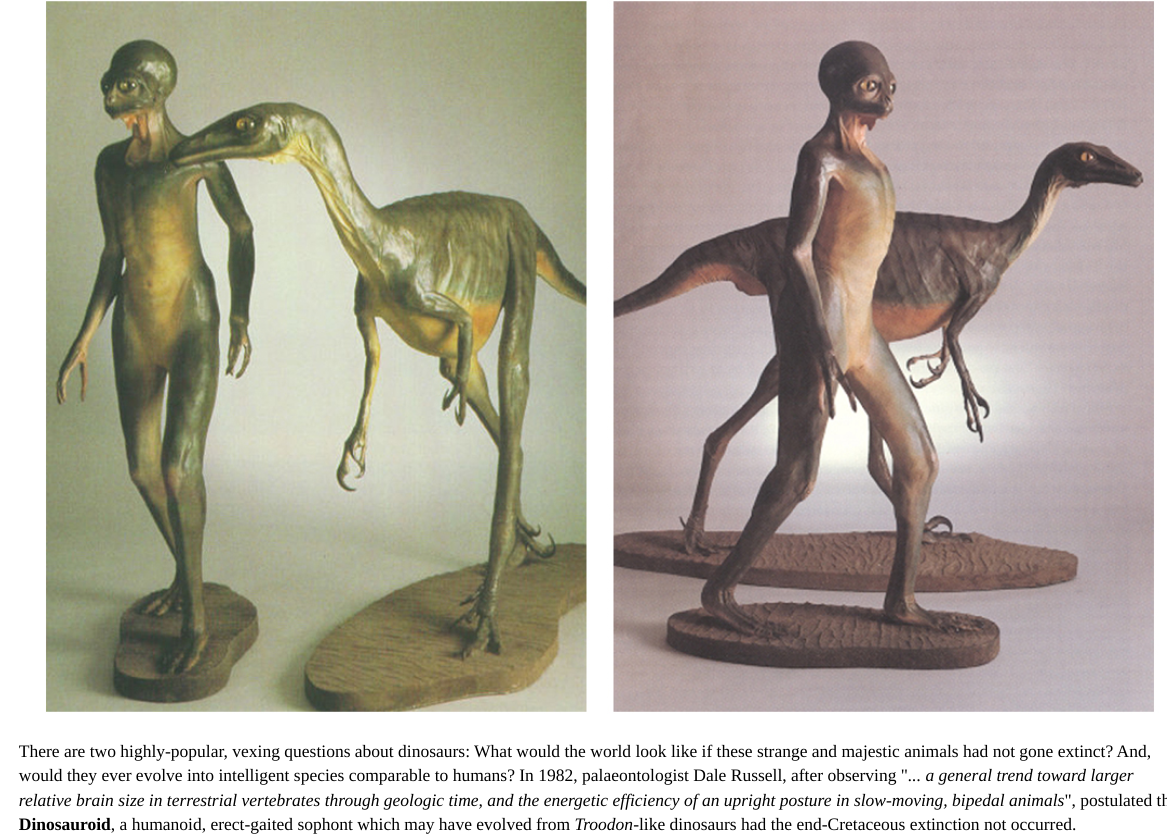
But let’s suppose a non-human intelligence really has made contact. Is it more likely that these are aliens, or as Dr. Michael P. Masters has proposed, they are our descendants traveling back in time to visit us? What’s more likely: That in the future our lineage evolves into time travelers that come back and visit us, or that a humanoid creature independently evolved on another planet and master space travel advanced enough to visit us?
If it’s the latter, this validates the views of Rushton because 1) If humanoid creatures evolved independently on at least one other planet, it shows evolution is arguably progressive, 2) assuming the popular grey alien image is correct, super intelligent life resembles Orientals, who Rushton deemed superior, and 3) if America had access to UFO technology since the 1940s, it explains why East Asians, fell behind technologically, despite being superior.
I think I’m the first person on the planet to have noticed that Jason from the Friday the 13th movies and Donald Trump have virtually the same birthday. Jason was born June 13, 1946 and Trump was born June 14, 1946. Indeed if Jason was born right before midnight, and Trump was born right after midnight, they could be twins born from the same pregnancy.
Perhaps in the next Friday the 13th movie, Jason could be Trump’s Vice President as he returns to the White House, but when a jury sends Trump to jail, Jason takes over as President and decides to nuke everyone since all he knows how to do is kill.
One of the best writers of all time, the great Cormac McCarthy passed away last night at the age of 89. Known for verbally painting a dystopian image of the American landscape, he saved almost all his words for the page, and granted virtually no interviews. A rare exception came when he gave his very first interview to Oprah in 2007.
The interview was a huge coup for Oprah, especially after literary snob Jonathan Franzen had publicly worried that her book club was too feminine, schmaltzy and middlebrow. So to have such a prestigious male writer accept the book club with pride, made Franzen look like a total poser. And even better, The Road, with its male leading characters and apocalyptic story bereft of hope and inspiration was a decidely off-brand pick for Oprah; the opposite of a stereotypical Oprah book, a way of telling the World, her club can not be pigeon-holed.
But getting the famously reclusive author to agree to an interview would be no easy task. Knowing his first impulse would be to say “no” Oprah instructed him to not answer right away. “I’ll call you back in 24 hours”. Oprah knew that in those 24 hours, other people would clue him in to what a huge opportunity it was and how crazy he’d be to turn her down. More specifically, there had been people like McCarthy’s publisher who had sacrificed for him for years and selling a lot of books on Oprah was a rare chance to pay the publisher back.
So when Oprah phoned back, McCarthy said yes. Far too shrewd to risk letting him change his mind, the second Oprah got the green light she flew to the research institute where McCarthy liked to hang around and filmed the interview right then and there.
[The following is a guest article and does not necessarily reflect the view of Pumpkin Person.]
For a while now I’ve been interested in the concept of psychological distance (PD). It’s about the level of abstractness on which you operate at a given moment. The dimensions of PD are:
The more distant a thought you’re having is (in terms of time, location, class or probability) the more abstract is your processing. For example, when thinking of a possible event, the abstractness of your thinking will increase the more distant in the future you imagine it to be, the less likely to happen you imagine it to be and the more distant in location you imagine it to be. In a similar way, the more distant in terms of class/social power the person you’re thinking about is, the more abstractly you will think about them.
As far I know, PD is not correlated to fluid or crystallized intelligence. I suspect it mostly affects how you use your g.
Larger or smaller PD is not better or worse by default. But in many cases, one is preferable than the other. In my understanding, the larger the PD, the more wise is your thinking – you tend to understand the essence and not get lost in the details. But not all contexts require wisdom. I think wisdom is needed to get you on the right path and then more concrete thinking is needed to solve whatever problem to which that path leads you.
There are many studies that have explored the effects of manipulating PD. Each of them usually focuses on a specific dimension of PD but there’s also the concept of self-affirmation. Self-affirmation in the context of the studies I’ve seen is about focusing on your top value. Specifically, writing about your top value as opposed to writing about a value with which you don’t feel strongly connected. Self-affirmation seems to make you think more abstractly since it has been shown to make you better at the holistic Gestalt Completion Test than at the more concrete picture completion subtest of the Wechsler Intelligence Scale for Children.
PD also depends on things such as how positively you’re currently feeling or how lucky you’re feeling. I’m sure in the future we’ll understand more and more about it.
What I’ve found really interesting is the effects of manipulating your sense of social power. According to studies, increasing your feelings of power doesn’t only result in your thinking in a more abstract way, but it also makes you more creative (divergent thinking, specifically) and increases you spatial abilities or at least a subset of them. Not all those effects are necessarily caused by a change in PD.
I find the concept and all its components and possibilities fascinating and I wanted to share some info about it.
I’m including some studies but there are many more. —– Cognitive consequences of affirming the self: The relationship between self-affirmation and object construal – PMC (nih.gov)
Induced Social Power Improves Visual Working Memory – Britt Hadar, Roy Luria, Nira Liberman, 2020 (sagepub.com)
Effects of Power on Mental Rotation and Emotion Recognition in Women – Tali Nissan, Oren Shapira, Nira Liberman, 2015 (sagepub.com)
Warm-up time corrects creativity power imbalance — ScienceDaily






 Pumpkin Person