
Davide Piffer claims that from the year 700 to 1850, Northern Europe saw a 0.78 standard deviation (SD) Increase in polygenic scores that predict education, and by extension IQ. But does that mean early Medieval Europeans were genetically 0.78 dumber, by which I mean that if we cloned them and raised them in today’s Northern European homes, they would score close to 0.78 SD lower than the average White? IQ 100 vs IQ 88 (U.S. white norms which yield IQs somewhat lower than those normed on the full U.S. population).
To answer this question, we need to look at the polygenic scores of extant populations we can actually test. Figure 12 shows the polygenic scores Piffer found for seven racial groups expressed in standard deviation units. Note that global samples are more genetically diverse than exclusively Northern Europeans so the SD here might be a bit inflated, thus overestimating gaps when applied within Europe.

Nonetheless, when we compare these polygenic scores (PG_Z) with Lynn’s 2006 IQ estimates based on actual IQ scores, we get a 0.58 group level correlation. If we crudely attempt to correct these numbers for the fact that some races suffer from Third World environment (which Lynn estimated subtracts 13 IQ points) or Second World type environments (7 points?), the correlation rises to 0.85.
| PGS_Z | IQ estimates derived from Lynn (2006) | Estimated IQ if everyone lived in First World | |
| Oceania | -2.1 | 62 | 75 |
| Middle East & South Asia | -0.4 | 84 | 91 |
| Europe | 0.8 | 99 | 99 |
| East Asia | 1.2 | 105 | 105 |
| America | -0.75 | 86 | 93 |
| Africa | -0.2 | 67 | 80 |
When we plot the six races on a simple graph, we see that a 1 SD change in this type of polygenic score predicts a 6.34 point change in expected IQ if raised in First World environments. So if we treat early Medieval Northern Europeans as just another race, their expected IQ in the First World would be 95 because their PGS are 0.78 SD lower that their modern IQ 100 counterparts, thus predicting an IQ that’s 0.78(6.34) = 5 points lower .
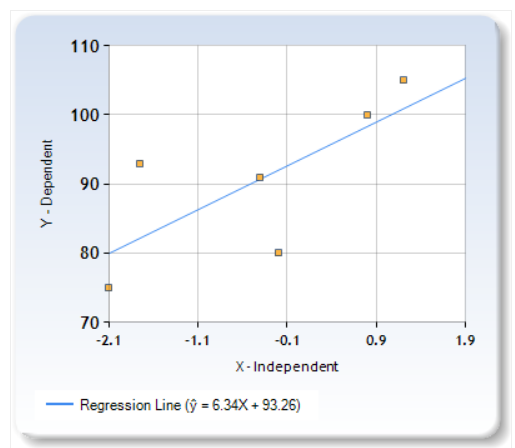
Now Piffer might argue that the PGS used in the above graph are low coverage genomes and thus less reliable but the Medieval genomes Piffer uses are also largely low coverage. Piffer might further argue that the races being compared in the graph are too genetically different to be compared on PGS, unlike Europeans separated by only 1000 years. Maybe, but I doubt there’s been enough research on low coverage genomes to say either way and if this method is not yet robust enough to compare extant populations in a species as genetically homogenous as our own, then what hope is there for guessing Neanderthal IQ?
 Pumpkin Person
If we crudely attempt to correct these numbers for the fact that some races suffer from Third World environment (which Lynn estimated subtracts 13 IQ points) or Second World type environments (7 points?), the correlation rises to 0.85.
This is the mistake. THis is why your estimate is so stupid.
Obviously medieval people are probably 1 or maybe 2 SDS lower in intelligence.
I feel like you’re denial of evolution is getting to religious fundamentalist type levels.
“Obviously medieval people are probably 1 or maybe 2 SDS lower in intelligence.”
Because there were no books to read, not because of genetics.
Puppy will now say medieval whites has the same IQ as blacks.
Watch.
No you’re the one saying that by implying medieval Northern whites had a genetic IQ of only 70 (2 SD below today’s Northern whites and 0.66 SD below Lynn’s estimate for the genetic IQ of full-blooded blacks)
Well actually blacks have IQs in the 60s. Everyone knows that.
In Africa they do but as Steve Sailer was the first to notice, full-blooded descendants of black slaves average about 1 SD higher in the U.S. in both IQ and height suggesting Third World environment subtracts about 1 SD from some phenotypes. Within the U.S. people were environmentally dumber (flynn effect) and shorter 100 years ago suggesting the 3rd world has nutrition today similar to what the 1st world had 100 years ago.
100 years ago the tests we more biased (culture unfair) and less accurate with small sample sizes.
Testing large numbers of the population representationally was not done.
not much education existed either
(all this happened in Africa as well)
(lots of data was thrown out and put together wrong 50 years ago)
(the larger population in Africa over a billion people do not have money to spend on kids because the environment prevents economic growth, the poverty trap)
“100 years ago the tests we more biased (culture unfair) and less accurate with small sample sizes”
They’re still culture unfair today. Rule-following considerations, etc.
rr dose not understand intelligence
Rule following is as rr defines it, is about doing what others tell you to do.
Intelligence is about discovering what rule apply to what situations so that you can get a result that works.
Tests today are seeing how well you can discover rules not “follow” them.
Some people can understand how to make things work and others cannot.
What brands of toothpaste are best is not what the IQ tests today are about, those are preferences not intelligence (understanding how to make thing work).
rr confuses preferences with intelligence
thus he thinks IQ tests today are unfair (which is incorrect, they are fair per what I said above)
If you try to make something work you need to discover what makes it work. Some people cannot do that with some problems because too much information is involved. To many things need consideration at once.
People solving multistep problems when confronted by an IQ test either see what needs to be done or they don’t. The test is looking for how much the person can deal with in a situation where they need to make the things work together.
If you are doing the test eventually your working memory runs out and you cannot do the more difficult problems.
IQ = the limit to which you can deal with information
the limit you have to solve harder and harder problems
–
I takes several IQ tests and they all involved dealing with more information at each item encountered.
Like in a video game the levels get harder
doing what others tell you to do is not what helps you solve those problems – the problem itself has information in it you need to understand or you cannot do it.
“Rule-following” is not the same as rule understanding of the information in the problem to get it done.
–
Overall rr denies people can solve problems at different levels of complexity.
He thinks IQ tests are about rule following not rule discovering.
People that discover more rules at the same time can solve more difficult problems.
That is all the tests are trying to figure out.
Fact is some people can handle more complexity than others.
rr thinks all intelligence is about socialization i.e. the blank slate. Anyone can be programmed to do anything.
Well no they cannot, some people have the ability to deal with complexity more than other and is why they can make complex or simple things.
If you are more intelligent you can do complex things.
“rule-following” is stupid argument against intelligence tests because its not measuring how well you follow rules but how much complexity you can discover.
rr thinks in odd terms because he did poorly in school, but in fact it was not his intelligence that was low but he did not want to do the school work.
This is why he defined IQ tests as rule following tests
because he don’t want to do them.
that’s a preference not intelligence
IQ tests measure complexity of ones intelligence but rr think they don’t just because he wants them not to.
RR: because they told me what to do I rejected all school and now I define any test as “rule-following”.
RR: because of my oppositional defiant disorder I came to understand all tests were bad and not valid.
Just because rr is personally against these tests does not mean they don’t measure a persons ability to deal with complexity.
If a person try’s to do an IQ test without be oppositional against it we can know how much complexity they can deal with as situations in real life also have complexity limitations.
Any person in real life has a level of complexity they can deal with by how complex they are relative to what other can deal with also. This is a real phenomena that peoples have different intelligence levels.
I mean to say people more intelligent than I am can do better on IQ tests and this is because they have more intelligence. I am not in denial as rr is. He is making excuses because “he don’t want to do it in school”.
Cool story bro. Where’s the error in my reasoning? What’s your understanding of the below argument?
No fact about an individual—neither mental content nor physical structure—uniquely determines the rule they are following. So rule following isn’t fixed by internal states. So rule following is socially—not genetically—constituted. Normative abilities cannot be genetically distributed. So hereditarianism is false. Cognitive ability is normative and what is normative is communal.
(1) H -> G -> P
Hereditarianism -> genes/g -> normative intelligence
(2) P -> R
Normative intelligence -> correct rule-following.
(3) R -> ~G
Rule following cannot be fixed by internal physical/mental states.
So ~(G -> P)
So ~H.
rule “following” is not what IQ tests are about
The tests are about rule discovering and dealing with complexity.
obviously you still don’t understand
hereditarianism is a red herring fallacy argument because it has nothing to do with what I said.
“Normative intelligence -> correct rule-following.”
this has nothing to do with understanding complexity
rr can handle complexity but just doesn’t want to understand what I am saying because he is motivated against the conclusions.
Understanding complexity -> can do well on IQ tests
differences in intelligence exist but rr won’t admit it because oppositional defiant e.g. cool story bro
And he will say the reason blacks didn’t have the same IQ as white 500 years later is……
RACISM
When people talk about intelligence what do they mean by that term?
In what I understand, it is the ability to take into consideration many possibilities at the same time to “calculate”/”solve” a problem.
That is to say the number of parts involved in any problem is being put together in such a way that a meaningful result is gotten to.
In saying that. You need both high working memory and high perceptual awareness to be high up in intelligence.
Just note what happens when you are sleep deprived and cannot solve problems yourself. You will think of less things when mentally tiered.
Generally people have limits to what information they can deal with in their heads. What can be considered when just thinking of a problem.
So there is a retention issue of which those parts being come together in your head for each individual. How to accomplish a plan of action is in relation to all the moving parts involved.
This is why some people can handle different environments with more or less involvement. Plans become more complex with more moving parts.
If the results you want are complex it takes more intelligence to get them accomplished.