A while back I was delighted to learn that my estimate for Elon Musk’s IQ had proven spot-on and now I discovered I was also spot-on for Jeff Bezos. I discovered a Washington Post article from Sept 2, 2000 in which Bezos states he scored 1450 on the SAT. Given that Bezos was born in 1964, he would have likely took the SAT in 1981. I’ve estimated that if all American 17-year-olds (including high school dropouts) had taken the SAT in the 1980s, the mean would have been 787 and the SD would have been 220. Thus Bezos score was +3.01 SD or IQ 145 (U.S. norms) (144 U.S. white norms).
But nearly seven years before I knew his SAT score, I estimated his IQ based on an anecdote.
I’ve long argued that media preferences, aesthetic judgement and artistic sophistication are correlated with IQ. I don’t think the correlation is especially high since art is subjective, but neither is it trivially low, but somewhere around 0.4, similar to the correlations of IQ with brain size and income.
Movie critics probably have an average IQ of 115 while the average internet movie fan probably has an IQ around 100, thus on rotten tomatoes, the greater the ratio of critical approval to popular approval for a given movie, the more culturally sophisticated it is likely to be.
An interesting example is Sound of Freedom which was liked by 99% of movie fans but only 57% of critics giving it a sophistication quotient of 57/99(100) = 58.
I’m not suggesting fans of this film have an average IQ of 58, but a lot of them are QAnon freaks who literally believe your favorite celebrities and Democrat elites eat babies and worship Satan. The best way to discredit a credible conspiracy theory (Epstein allegedly blackmailing politicians to affect Middle East policy) is to mix it with absurd ones. I’m not saying Sound of Freedom promoted QAnon but QAnon promoted the film which appealed to what one critic called “dads with brain worms”.
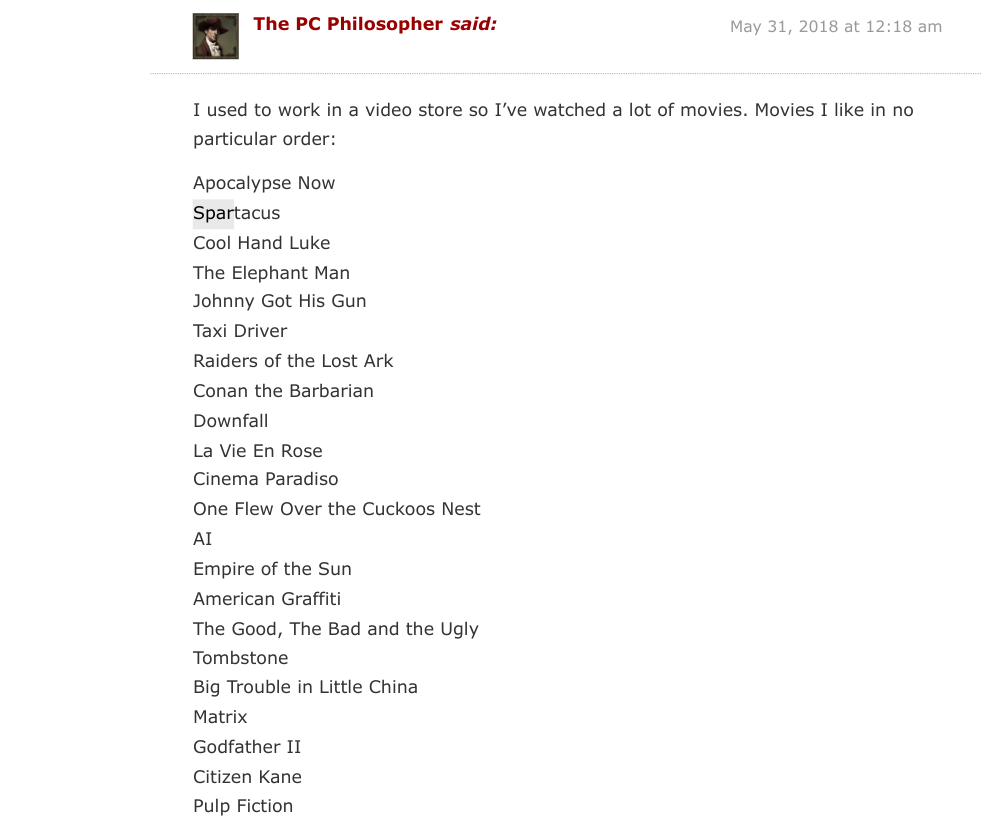
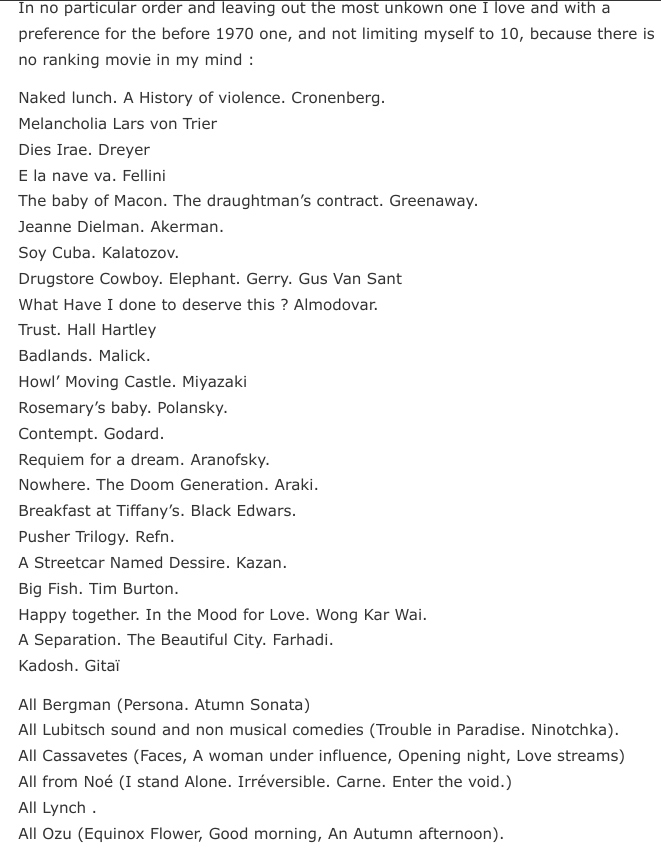
How does my own taste in movies score by this metric? Years ago I published a list of my ten favorite movies and here’s how they did: Halloween (1978) 108, Friday the 13th (1980) 110, Carrie (1976) 121, The Sweet Hereafter (1997) 114, American Beauty (1999) 94, Silent Night Deadly Night (1984) 115, 2001: A Space Odyssey (1968) 103, Creepshow (1982) 94, Quest for Fire (1981) 117, and The Breakfast Club (1985) 97. Mean score: 107; Median 109
Here’s what some other commenters had to say. I’m too tired to calculate the scores but feel free to do so in the comment section.
In light of all this discussion about the soul, I thought this interview with Robert Sapolsky was relevant. Sapolsky is a fierce opponent of free will which he defines as a behavior that has just occurred, completely independently of the brain’s history (including genetic history).
Actually, as James Flynn has hinted, the closest science has come to proving Sapolsky’s definition of free will is “non-shared environment” which psycholgists define as the correlation between identical twins raised together subtracted from the correlation between the same person measured twice on some phenotype. Since that former correlation measures both genes and the only environment you were raised in, the fact that it’s still less than the correlation you have with yourself implies there is something about you that transcends both your seed and the garden you were planted in.
Of course Sapolsky would scoff at the idea of calling this free will, as there are all kinds of environmental affects independent of the family you were raised in such as peer groups, that special teacher who inspired you, the media etc. Indeed Jensen argued that shared environment was a great many mico-biological effects like getting punched in the head in the playground to getting less oxygen in the womb. However until non-shared environment can be explained, it continues to be described as “luck” and luck is just unexplained variance. What’s interesting is that while shared environment goes from about 40% of the variance to zero as we move from childhood to later adulthood when it comes to IQ, non-shared environment stays at 20% across the life-span which as Flynn noted, is exactly what you’d expect from “luck”.
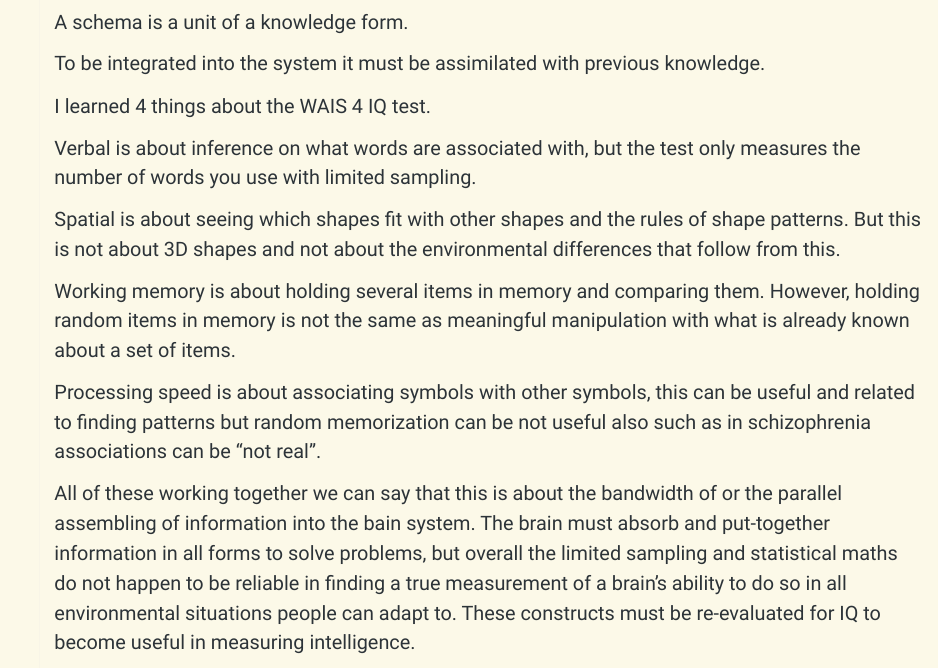
Speaking of IQ, our very own Anime (aka Illumanaticatblog) had some random thoughts on the WAIS he wanted to share:


 Pumpkin Person