• About

Pumpkin Person

~ The psychology of horror

Pumpkin Person

Monthly Archives: August 2023

Vivek Ramaswamy’s IQ

28 Monday Aug 2023

Posted by pumpkinperson in Uncategorized

≈ 476 Comments

There’s a stereotype that IQ tests just measure book smarts and yet intelligence itself evolved because of it’s practical real World survival value. Thus I’m always fascinated when a bookish high IQ nerd decides to compete in a decidedly non-nerdy field like politics. Will their lack of charisma make them look like a dork, or will their intelligence allow them to adapt to even the most unlikely of situations.

Ramaswamy has a lot going against him. He is dark skinned, foreign named and Hindu in a party that is Evangelical Christian and anti-immigration. He’ll never be able to compete with Trump when it comes to charisma and ability to connect with working class whites, however by becoming Trump’s most vocal and articulate supporter and vowing to pardon Trump of everything if he ever becomes President, he is gradually emerging as the most popular non-Trump candidate and inoculating himself from attacks from Trump himself.

He also took the disadvantage of being a perceived foreigner in a nativist movement and cleverly turned it to his advantage by putting a brown face on Trump’s fan base thus making them feel less racist.

By skillfully and shamelessly sucking up to Trump and calling him the greatest President of the century, he was able to get the crowd screaming so hysterically on his side that anti-Trump Chris Christie was nearly booed off the stage.

But Governor Nikki Haley was having none of it. Before this arrogant young Brahman came along, she was the top Indian American in the GOP.

Just as Ramaswarmy had turned the crowd against Chris Christie for being anti-Trump, Haley turned the crowd against Ramaswarmy for being insufficiently pro-Israel, scolding him for thinking Israel needs America; arguing it’s America that needs Israel! The Israel loving crowd went wild.

So what is his IQ?

In 2016 Forbes ranked Ramaswarmy as one of the 40 richest U.S. entrepreneurs under 40. Virtually everyone on the list was born between 1977 and 1993 and all but two were men. Assuming there are 32 million American men born in those years, Ramaswarmy’s 24th place ranking puts his self-made wealth around the one in 1.3 million level for American men in his age range. If there were a perfect correlation between IQ and life-time earnings, this would equate to an IQ 72 points above the U.S. mean, but because the correlation between IQ and permanent income in men is 0.48, his expected IQ is 72(0.48) = 35 points above the U.S. mean or 135 (U.S. norms).

However even this is likely an underestimate because Ramaswarmy is much more educated than the average young gazillionaire. While about 15% of the young and self-made super rich attended Harvard, Ramaswarmy not only graduated, but did so in STEM, and then on top of that, got a JD from Yale Law giving him the most impressive credentials of anyone on the 40 person list (though one other guy went to Caltech).

If there were a perfect correlation between IQ and education, we’d expect the most educated person among the 40 under 40 to be 30 IQ points above the group mean, but since the correlation between IQ and education among same age peers is 0.7, and slips to 0.4 when we look at people of similar income levels, his expected IQ would be 30(0.4) = 12 points above the mean of a group which is already 35 points above the U.S. mean.

In other words the expected IQ of a U.S. under-40 near-billionaire with two Ivy League degrees is 147 (U.S. norms) or 146 (white norms) and until we get some actual psychometric data, this is a good guess for Ramaswarmy.

This is one in a 1000 level intellect.
Share this:

  • Click to share on X (Opens in new window) X
  • Click to share on Facebook (Opens in new window) Facebook
Like Loading...

Autism should be defined by age controlled synaptic density and NOTHING ELSE!

26 Saturday Aug 2023

Posted by pumpkinperson in Uncategorized

≈ 41 Comments

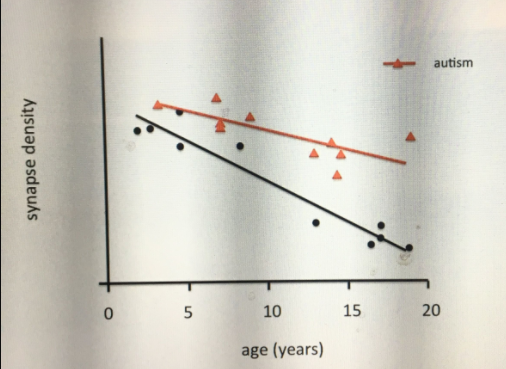
Look at this chart comparing the synaptic density of autistic and non-autistic young people.

Although the sample size is small (which is understandable given how few people not only die in childhood but also have their brains donated to science and also have an autism diagnosis on file) there is virtually no OVERLAP. Every single autistic person is above the regression line for neurotypicals and every single neurotypical is below the regression line for autistic people. What makes this so striking is you’d expect just from misdiagnosis, some people diagnosed with autism would actually be neurotypical and yet despite such error, we still get virtually no overlap, suggesting age controlled synaptic density is virtually a perfect predictor of autism.

So perhaps autism should simply be defined as which regression line you’re closer to in the above chart. The one for autistic people, or the one for neurotypicals. Just as Downs syndrome is diagnosed by an extra 21st chromosome, without need for questionnaires, autism too could have a nice neat medical definition.

On the other hand, I’ve long argued that brain size is a cause of intelligence and that intelligence is the ability to adapt, so how can I associate synaptic density (a proxy for brain size) with a maladaptive condition like autism?

My guess is there are two kinds of big brained people. Those who have big brains because they have a lot of neurons, and those who have big brains because they have a lot of redundant connections between those neurons. The former will tend to be gifted while the latter will tend to have autism, though many will tend to have both. If we limited our samples to nerotypicals, the correlation between brain size and IQ might jump from perhaps 0.4 (the current estimate) to 0.5 or even 0.6.

How exactly extra connections cause autism is not entirely clear. One idea I heard an Asian researcher suggest (sorry I forget his name) is that connections compete to form in a Darwinian struggle, so if you don’t prune the weak ones, you drag down the fitness of the brain.

But why is social intelligence especially impaired in autism? My guess is that since most brain pruning occurs in late childhood and adolescence, the very years where we acquire the most social skills, it is the social brain that especially fails to prune.

Share this:

  • Click to share on X (Opens in new window) X
  • Click to share on Facebook (Opens in new window) Facebook
Like Loading...

Take the PAT: Pumpkin’s Autism Test

25 Friday Aug 2023

Posted by pumpkinperson in Uncategorized

≈ 52 Comments

1) Is your head circumference at least 1 standard deviation higher than predicted from your IQ (controlling for age, ethnicity and sex)?

2) Is your normalized lifetime household income more than 1 standard deviation lower than predicted from your IQ?(controlling for age, ethnicity and sex)

3) Is your physical coordination more than 1 standard deviation lower than predicted from your IQ?(controlling for age, ethnicity and sex)

4) Is your Picture Arrangement score more than 1 standard deviation lower than predicted from your overall IQ?

5) Is your Comprehension score more than 1 standard deviation lower than predicted from your overall IQ?

If you correctly answered yes to at least 3 of the 5 questions, then in my humble opinion, you might have autism.

Share this:

  • Click to share on X (Opens in new window) X
  • Click to share on Facebook (Opens in new window) Facebook
Like Loading...

First norming of the jig-saw test

22 Tuesday Aug 2023

Posted by pumpkinperson in Uncategorized

≈ 69 Comments

I now have data on nine people who have taken both my jig-saw and an undergraduate college admission test (SAT/ACT).

Because age has an acute effect on jig-saw, I converted all jig-saw scores to age adjusted jig-saw scores by deducting 0.33 points points for each year below 32 you are when you took the test (up to a maximum of seven years). I also added 0.33 points for each year above 32 (no maximum).

Thus if you only solved the red puzzle (six pieces) and thus got a score of 6, but you’re 60-years-old (28 years above 32) your age adjusted score becomes 6 + 0.33(28) = 15.

Then using equipercentile equating, I equated the nine age adjusted jig-saw scores with the IQ equivalents of the SAT/ACT scores in the same sample.

The result is the following formula for deriving spatial IQ (U.S. norms) from age adjusted iig-saw puzzle scores:

Spatial IQ = 2.01(age adjusted jig-saw score) + 71.16

To be clear, age adjusted score is simply the score you would have got if you too the test at 32. If you are 32, no need to age adjust.

I other words (at age 32):

Red 0 to 6 pieces: spatial IQ 71 to 83 (U.S. norms)

Yellow 8 pieces: spatial IQ 87

Green 10 pieces: spatial IQ 91

Blue 15 pieces: spatial IQ 101

Bronze 20 pieces: spatial IQ 111

Silver 24 pieces: spatial IQ 119

Gold 30 pieces: spatial IQ 131

If future research replicates these studies, the results have vocational implications. For example, in the past if you had a verbal IQ of 110 and a spatial IQ of 110, it would make just as much sense to pursue a verbal career as a spatial one, since you’re at the 75th percentile in both domains.

However because my jig-saw test like my crossword test before it, has arguably a true 0 point (no ability to join any pieces in 2 minutes), I can arguably say someone with both a verbal and spatial IQ of 110 is twice as verbally smart as the average person, but only 33% smarter spatially. Thus despite being equally ranked in both domains, they’ll be much more dominant verbally. This may help explain why people with high verbal IQs make more money on average than their spatially gifted counterparts.

Share this:

  • Click to share on X (Opens in new window) X
  • Click to share on Facebook (Opens in new window) Facebook
Like Loading...

The most scientific spatial IQ test ever made

15 Tuesday Aug 2023

Posted by pumpkinperson in Uncategorized

≈ 186 Comments

I created a very special series of jig-saw puzzles. In order to try them you must register by giving a first and last name (email is optional) but you don’t have to use your real name or even the pseudo-name we know you by, but whatever name you choose, please write it down somewhere safe so you’ll remember it for next time I post one of these tests which will likely be very soon. If you already took the crossword test, try to use the same name you used to register for that.

By using the same name every time you take a test, not only can you build a diagnostically informative cognitive profile, but you allow me to calculate how well my tests intercorrelate.

So what makes this spatial test so special? Your score is simply the number of pieces in the hardest puzzle you can solve in 2 minutes. If you can’t solve any puzzle in 2 minutes, your score is simply the number of pieces you connect in 2 minutes on the easiest one.

Because your score is literally the number of pieces you can connect in 2 minutes, this test measures spatial ability on an absolute scale with a true zero point. So someone who can solve the 8 piece puzzle in 2 minutes can be roughly considered 33% more spatially intelligent than someone who can only solve the 6 piece puzzle in 2 minutes.

This is rare chance to study the true distribution of cognition on an absolute scale.

Share this:

  • Click to share on X (Opens in new window) X
  • Click to share on Facebook (Opens in new window) Facebook
Like Loading...

First norming of crossword puzzle

14 Monday Aug 2023

Posted by pumpkinperson in Uncategorized

≈ 44 Comments

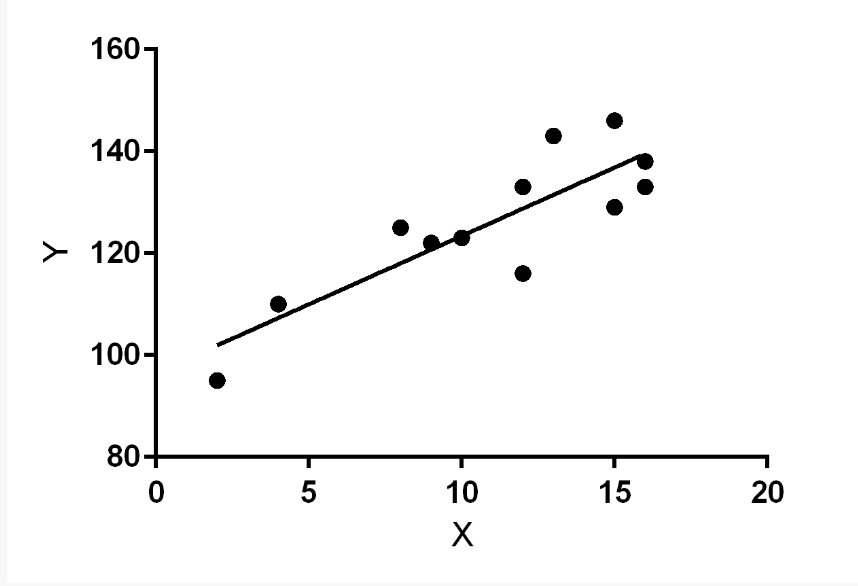
I now have data on 12 people who have taken both my crossword puzzle and a well normed verbal intelligence test (SAT verbal, Wechsler verbal index, WAIS-IV Information, WAIS-IV Similarities). Nine of these people are self-reported scores from readers and three are from family members I personally witnessed taking both the crossword and a verbal test. The Pearson r correlation between the crossword scores and the verbal intelligence test scores is an astonishing 0.86 confirming once again that vocabulary is a powerful test of IQ.

When all the verbal test scores are converted to the Wechsler IQ scale (U.S. mean = 100; SD = 15) and plotted along the Y axis, and crossword scores (out of 17) are plotted on the X axis, we get a remarkably linear relationship.

Source: https://www.graphpad.com/quickcalcs/linear2/

The sample has a mean verbal IQ equivalent of 126 (SD 13.8) and a mean crossword score of 11 (SD 4.4). From here we can make some rough equivalencies:

0 = verbal IQ 92

1 = verbal IQ 95

2= verbal IQ 98

3 = verbal IQ 101

4 = verbal IQ 104

5 = verbal IQ 108

6 = verbal IQ 111

7 = verbal IQ 114

8 = verbal IQ 117

9 = verbal IQ 120

10 = verbal IQ 123

11 = verbal IQ 126

12 = verbal IQ 129

13 = verbal IQ 132

14 = verbal IQ 135

15 = verbal IQ 139

16 = verbal IQ 142

17= verbal IQ 145

Because all the words in the crossword were selected at random and thus have a true zero point (retrieving none of the words in the sample), we can say some interesting things about the distribution of receptive vocabulary. Someone with a verbal IQ of 111 (average U.S. university graduate) has roughly twice the receptive vocabulary of the average American.

Someone with a verbal IQ of 120 (average person with advanced degree) has roughly triple the receptive vocabulary of the average American. These large gaps help explain why society is so stratified along educational and occupational lines.

These norms probably work best for people just under 40. Those above 40 may deserve a bonus of perhaps 1 IQ point a decade since retrieval ability declines with older age.

Share this:

  • Click to share on X (Opens in new window) X
  • Click to share on Facebook (Opens in new window) Facebook
Like Loading...

The most scientific verbal IQ test ever made

09 Wednesday Aug 2023

Posted by pumpkinperson in Uncategorized

≈ 134 Comments

I created a very special crossword puzzle. In order to take it you must register by giving a first and last name but you don’t have to use your real name or even the pseudo-name we know you by, but whatever name you choose, please write it down somewhere safe so you’ll remember it for next time I post one of these tests which will likely be very soon.

By using the same name every time you take a test, not only can you build a diagnostically informative cognitive profile, but you allow me to calculate how well my tests intercorrelate.

So what makes this crossword puzzle so special? I created it by selecting 17 words completely randomly from the English language. The crossword clue for each word was simply each word’s definition from the most authoritative dictionary.

Because the words were completely chosen at random and thus are a representative sample of all English words, a perfect score means you can retrieve close to 100% of the English language from seeing just the definitions and a 0 score means you can retrieve close to zero percent.

Further, because this test has a true zero point, someone who scores 4 out of 17 has arguably twice the receptive vocabulary as someone who scored 2 who has twice the receptive vocabulary as someone who scored 1. This is rare chance to study the true distribution of cognition on an absolute scale.

Share this:

  • Click to share on X (Opens in new window) X
  • Click to share on Facebook (Opens in new window) Facebook
Like Loading...

contact pumpkinperson at easiestquestion@hotmail.ca

Recent Comments

pumpkinperson's avatarpumpkinperson on Which better predicts populati…
RaceRealist's avatarRaceRealist on Which better predicts populati…
Anime's avatarAnime on Which better predicts populati…
RaceRealist's avatarRaceRealist on Which better predicts populati…

Archives

  • December 2025
  • November 2025
  • October 2025
  • September 2025
  • August 2025
  • July 2025
  • June 2025
  • May 2025
  • April 2025
  • March 2025
  • February 2025
  • January 2025
  • December 2024
  • November 2024
  • October 2024
  • September 2024
  • August 2024
  • July 2024
  • June 2024
  • May 2024
  • April 2024
  • March 2024
  • February 2024
  • January 2024
  • December 2023
  • November 2023
  • October 2023
  • September 2023
  • August 2023
  • July 2023
  • June 2023
  • May 2023
  • April 2023
  • March 2023
  • February 2023
  • January 2023
  • December 2022
  • November 2022
  • October 2022
  • September 2022
  • August 2022
  • July 2022
  • June 2022
  • May 2022
  • April 2022
  • March 2022
  • February 2022
  • January 2022
  • December 2021
  • November 2021
  • October 2021
  • September 2021
  • August 2021
  • July 2021
  • June 2021
  • May 2021
  • April 2021
  • March 2021
  • February 2021
  • January 2021
  • December 2020
  • November 2020
  • October 2020
  • September 2020
  • August 2020
  • July 2020
  • May 2020
  • April 2020
  • March 2020
  • February 2020
  • January 2020
  • December 2019
  • November 2019
  • October 2019
  • September 2019
  • August 2019
  • July 2019
  • June 2019
  • May 2019
  • April 2019
  • March 2019
  • February 2019
  • January 2019
  • December 2018
  • November 2018
  • October 2018
  • September 2018
  • August 2018
  • July 2018
  • June 2018
  • May 2018
  • April 2018
  • March 2018
  • February 2018
  • January 2018
  • December 2017
  • November 2017
  • October 2017
  • September 2017
  • August 2017
  • July 2017
  • June 2017
  • May 2017
  • April 2017
  • March 2017
  • February 2017
  • January 2017
  • December 2016
  • November 2016
  • October 2016
  • September 2016
  • August 2016
  • June 2016
  • February 2016
  • January 2016
  • November 2015
  • May 2015
  • January 2015
  • December 2014
  • November 2014
  • October 2014

Categories

  • ethnicity
  • heritability
  • income
  • Oprah
  • Uncategorized

Meta

  • Create account
  • Log in
  • Entries feed
  • Comments feed
  • WordPress.com

Recent Comments

pumpkinperson's avatarpumpkinperson on Which better predicts populati…
RaceRealist's avatarRaceRealist on Which better predicts populati…
Anime's avatarAnime on Which better predicts populati…
RaceRealist's avatarRaceRealist on Which better predicts populati…

Archives

  • December 2025
  • November 2025
  • October 2025
  • September 2025
  • August 2025
  • July 2025
  • June 2025
  • May 2025
  • April 2025
  • March 2025
  • February 2025
  • January 2025
  • December 2024
  • November 2024
  • October 2024
  • September 2024
  • August 2024
  • July 2024
  • June 2024
  • May 2024
  • April 2024
  • March 2024
  • February 2024
  • January 2024
  • December 2023
  • November 2023
  • October 2023
  • September 2023
  • August 2023
  • July 2023
  • June 2023
  • May 2023
  • April 2023
  • March 2023
  • February 2023
  • January 2023
  • December 2022
  • November 2022
  • October 2022
  • September 2022
  • August 2022
  • July 2022
  • June 2022
  • May 2022
  • April 2022
  • March 2022
  • February 2022
  • January 2022
  • December 2021
  • November 2021
  • October 2021
  • September 2021
  • August 2021
  • July 2021
  • June 2021
  • May 2021
  • April 2021
  • March 2021
  • February 2021
  • January 2021
  • December 2020
  • November 2020
  • October 2020
  • September 2020
  • August 2020
  • July 2020
  • May 2020
  • April 2020
  • March 2020
  • February 2020
  • January 2020
  • December 2019
  • November 2019
  • October 2019
  • September 2019
  • August 2019
  • July 2019
  • June 2019
  • May 2019
  • April 2019
  • March 2019
  • February 2019
  • January 2019
  • December 2018
  • November 2018
  • October 2018
  • September 2018
  • August 2018
  • July 2018
  • June 2018
  • May 2018
  • April 2018
  • March 2018
  • February 2018
  • January 2018
  • December 2017
  • November 2017
  • October 2017
  • September 2017
  • August 2017
  • July 2017
  • June 2017
  • May 2017
  • April 2017
  • March 2017
  • February 2017
  • January 2017
  • December 2016
  • November 2016
  • October 2016
  • September 2016
  • August 2016
  • June 2016
  • February 2016
  • January 2016
  • November 2015
  • May 2015
  • January 2015
  • December 2014
  • November 2014
  • October 2014

Categories

  • ethnicity
  • heritability
  • income
  • Oprah
  • Uncategorized

Meta

  • Create account
  • Log in
  • Entries feed
  • Comments feed
  • WordPress.com

Blog at WordPress.com.

Privacy & Cookies: This site uses cookies. By continuing to use this website, you agree to their use.
To find out more, including how to control cookies, see here: Cookie Policy
  • Subscribe Subscribed
    • Pumpkin Person
    • Join 686 other subscribers
    • Already have a WordPress.com account? Log in now.
    • Pumpkin Person
    • Subscribe Subscribed
    • Sign up
    • Log in
    • Report this content
    • View site in Reader
    • Manage subscriptions
    • Collapse this bar
 

Loading Comments...
 

    %d